
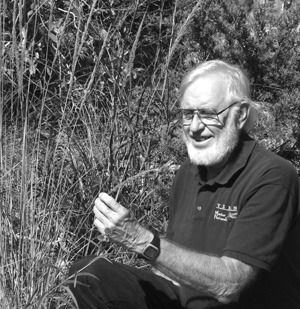
The name of this column, “Hill Country Naturalist,” was chosen in part to indicate that, to the extent that I have any particular expertise in matters of the natural world, it is pretty much limited to the Hill Country. I can’t claim to be particularly knowledgeable about the plants of the Rio Grande Valley or the habitats of the Piney Woods. So in these columns I generally stick to Hill Country things and leave the broader environmental/ energy/population/ climate issues to others.
I was, however, struck by an article recently in the New York Times by Thomas Friedman, concerning how some of the principles that I have previously discussed in these columns are also applied to the Earth as a whole.
As I have discussed before, the term “carrying capacity,” applies to the capacity of a given property to support wildlife and livestock, long term. Carrying capacity is defined as the number of animals that the property can provide food, water and shelter for, long term, without degrading the habitat. The idea is that a particular piece of land can grow only so much forage, capture and hold only so much water, and provide only so much shelter. If the animals on the land consume more than the property can produce in the next growing season, then the habitat will be degraded because they are taking more than the land can replace.
I have also applied the idea to the human population of the Hill Country as a whole, arguing that as more and more people move here, buying up small pieces of ranches, using more water, polluting more, and mismanaging the landscape, the capacity of the land to accommodate the increasing population will diminish. The long-term result of this land fragmentation will be a decrease in the qualities of the Hill Country that many of us came here for in the first place.
In his Times article, Friedman relates how a group of scientists have calculated how much land area and water area we need to produce the resources we consume and absorb our waste, using current technology. Their calculations show that we need 1.5 Earths! Friedman quotes Australian environmentalist Paul Gilding as saying, “The Earth is full. We are now using so many resources and putting out so much waste into the Earth that we have reached some kind of limit, given current technologies.”
My interpretation of all that is that we humans have exceeded the carrying capacity of the Earth and we are now degrading our habitat, worldwide, just as I argued that we may be doing with land fragmentation here in the Hill Country.
My solution for the Hill Country is that if we are to continue to put more and more people onto a fixed amount of land with a fixed amount of available water, we need to do so in ways that minimize the impact we all have on the land. This means managing our landscape for the most healthy, productive habitat possible. In short, it means not allowing grazing or browsing animal numbers to exceed the carrying capacity of the land. It means not allowing cedar to take over the grasslands. It means minimizing our use of water and managing the land to better absorb rainwater without runoff. It can also mean minimizing our use of energy, recycling to reduce waste accumulation and harvesting rainwater. It means landscaping with native plants, minimizing lawn areas and utilizing cacti and succulents to conserve water.
The parallel between what we need to do in the Hill Country and Gilding’s thoughts for global solutions is striking. He states, “The economy is going to have to get smaller in terms of physical impact…..To do that you need a growth model based on giving people more time to enjoy life, but with less stuff.” And he believes it will happen, stating “We may be slow, but we are not stupid.”
I would put it another way, when we manage our own property in ways that best preserve a healthy habitat and conserve water, we not only benefit ourselves, but also our Hill Country neighbors, and even the planet as a whole.
The older I get, the more I believe there is no correlation between the amount of stuff I have and my quality of life. We need to save more, conserve more and consume less. Think about it. Together, we can make a difference.
Until next time… Jim Stanley is a Texas Master Naturalist and the author of the books “Hill Country Ecology,” “Hill Country Landowner’s Guide” and “ A Beginner’s Handbook for Rural Texas Landowners.” He can be reached at <jstmn@ktc.com>. Previous columns can be seen at <www. hillcountrynaturalist.org>, or at Riverside Nature Center at <https://riversidenaturecenter. org/past-blogs-from-a-friend/>.