
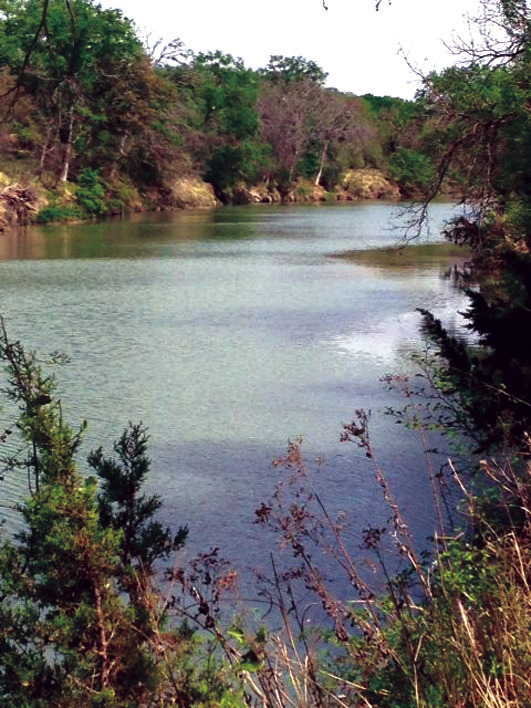
A proposed transmission line near this unique historic river impacts a treasure belonging to all Texans.
Friends of the San Saba River (FOSS) is leading the fight against the proposed routes for the Oncor and LCRA Transmission Services Corporation’s (LCRA TSC) Bell County East to Big Hill 765-kilovolt (kV) transmission line. All proposed routes would negatively impact the San Saba River, and its Brady Creek tributary. FOSS believes Oncor and LCRA TSC should construct their 765kV transmission line along existing or planned highway rights-of-way or along existing easements away from the river and its tributaries.
Background
In 2023, the Texas legislature enacted House Bill 5066 to expedite and expand electricity transmission infrastructure, particularly for high-growth areas like the Permian Basin. The Texas Public Utility Commission (PUC) and ERCOT adopted a plan that requires three 765kV transmission lines from Central Texas to the Permian Basin. The Oncor and LCRA TSC Bell County East to Big Hill project (Bell to Big Hill) is the eastern section for the middle of the three 765kV transmission lines.
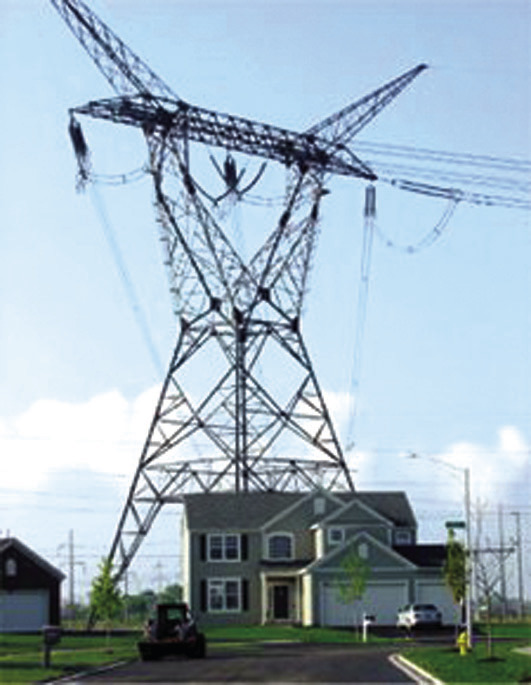
Texas does not currently have any 765kV transmission lines. A 765kV transmission line carries over twice the voltage that Texas’ largest 345kV transmission lines carry today. The conductors and wires for a 765kV line are extremely heavy and carry so much electricity that they require huge, broad based, multi-armed 140-foot-tall steel lattice towers to support the conductors and wires. A 765kV transmission line requires a minimum 200-foot horizontal right of way and all trees or structures in the right of way must be removed.
FOSS Concerns
FOSS is a not-for-profit organization that was formed in 2012 to protect the San Saba River.
FOSS believes the Bell to Big Hill 765kV transmission line project will destroy the habitat and increase flood risk in places where the lines cross or run close to the San Saba River. Wildlife, fish, and endangered freshwater mussels that rely on the river and habitat for water, food and cover would be at risk.
Landowners who rely on the San Saba River for residential and livestock use would also be negatively impacted and their property value would be destroyed. The reduction in taxable value with no revenue replacement would negatively impact local government budgets.
Since June 2025, FOSS has grown from less than 50 members to nearly 200 today. FOSS recently held a meeting with 80 of its members to brief them on actions taken and next steps.
FOSS Results
FOSS achieved the following results during the second half of 2025:
• Engaged with state legislators to raise awareness and support for FOSS concerns.
• Five Committee Chairmen of the Texas House filed a joint letter into the PUC docket outlining their concerns over the siting of this massive infrastructure with the PUC. Additional letters from three other representatives and one Senator echoing similar concerns have also been filed into the PUC docket.
• Produced a professional video, launched a social media campaign and placed gate signs saying “No 765kV on the San Saba River” at strategic highway locations, all to increase public awareness.
• Engaged and educated local elected officials on the issue. Resolutions opposing the proposed routes were passed by the McCulloch and Mason County Commissioners Courts and the City of Brady.
• Raised public opposition to influence Oncor/LCRA TSC’s delay of their decision on the route from December 2025 to March 2026.
Endangered Freshwater Mussels Central Texas Rivers are home to certain freshwater mussel species that do not exist anywhere else in the world. Freshwater mussels clean the aquatic ecosystem in rivers by filtering impurities from the water, and they feed on algae, bacteria and silt. These mussels are an important reason why Central Texas Rivers are clear and clean.
In June 2024, following a 13-year evaluation, the U.S. Fish and Wildlife Service (USFWS) listed six species of Central Texas freshwater mussels as endangered, and one species as threatened. Four of these species are found in the San Saba River, and the river was identified as “Critical Habitat” to be protected in accordance with federal law under the Endangered Species Act.
LCRA TSC, and its owner LCRA, entered into a separate Candidate Conservation Agreement with Assurances (CCAA) with the USFWS in September 2023. The CCAA designated the entire San Saba River and its riparian valley as a “Conservation Zone” for the protection of the endangered mussel species and their habitat. The CCAA and the Endangered Species Act require LCRA TSC to consult with the USFWS about construction of any significant new infrastructure in and along the San Saba River.
LCRA TSC has not consulted with USFWS about the Bell to Big Hill 765kV transmission line, as required by the Endangered Species Act and the CCAA. Oncor and LCRA TSC did not provide notification in the original PUC Docket, in the June 2025 landowner notices or to the public that their proposed routes, all of which cross the San Saba River, will impact federally designated “Critical Habitat” and a contractually identified “Conservation Zone”, or explained how their proposed routes will protect the environmental integrity of the San Saba River.
FOSS submitted two detailed letters to the PUC explaining the issues discussed above in PUC Docket 58559, Items 110 and 115. FOSS believes the PUC cannot properly approve any routing that impacts the environmental integrity of the San Saba River.
Highway Rights of Way FOSS believes Oncor and LCRA TSC should construct the Bell to Big Hill 765kV transmission line along existing or planned highway rights-ofway or along existing easements away from the San Saba River.
LCRA TSC was involved in a similar transmission line routing application designed to transmit wind energy from West Texas to other parts of Texas. Initial routes proposed by LCRA TSC would have crossed Hill Country counties between Schleicher and Kendall counties. The PUC required LCRA TSC to expand its study area to include rightof- way along I-10 and ultimately approved routing that followed existing utility rights-of-way along state highways and I-10. This PUC routing decision is known as the “Hill Country Exemption”.
FOSS believes Oncor and LCRA TSC should move the Bell to Big Hill route to existing easements along US Highways 190 and 87, which includes the planned I-14 corridor. Construction along the I-14 corridor would be located on easier terrain where access is better for line and right-of-way maintenance at a lower cost. In addition, land values would be significantly cheaper, and the route could avoid the San Saba River. Lower costs would reduce transmission cost recovery paid by all electricity rate payers.
---- Dave Clark is an FOSS Director