
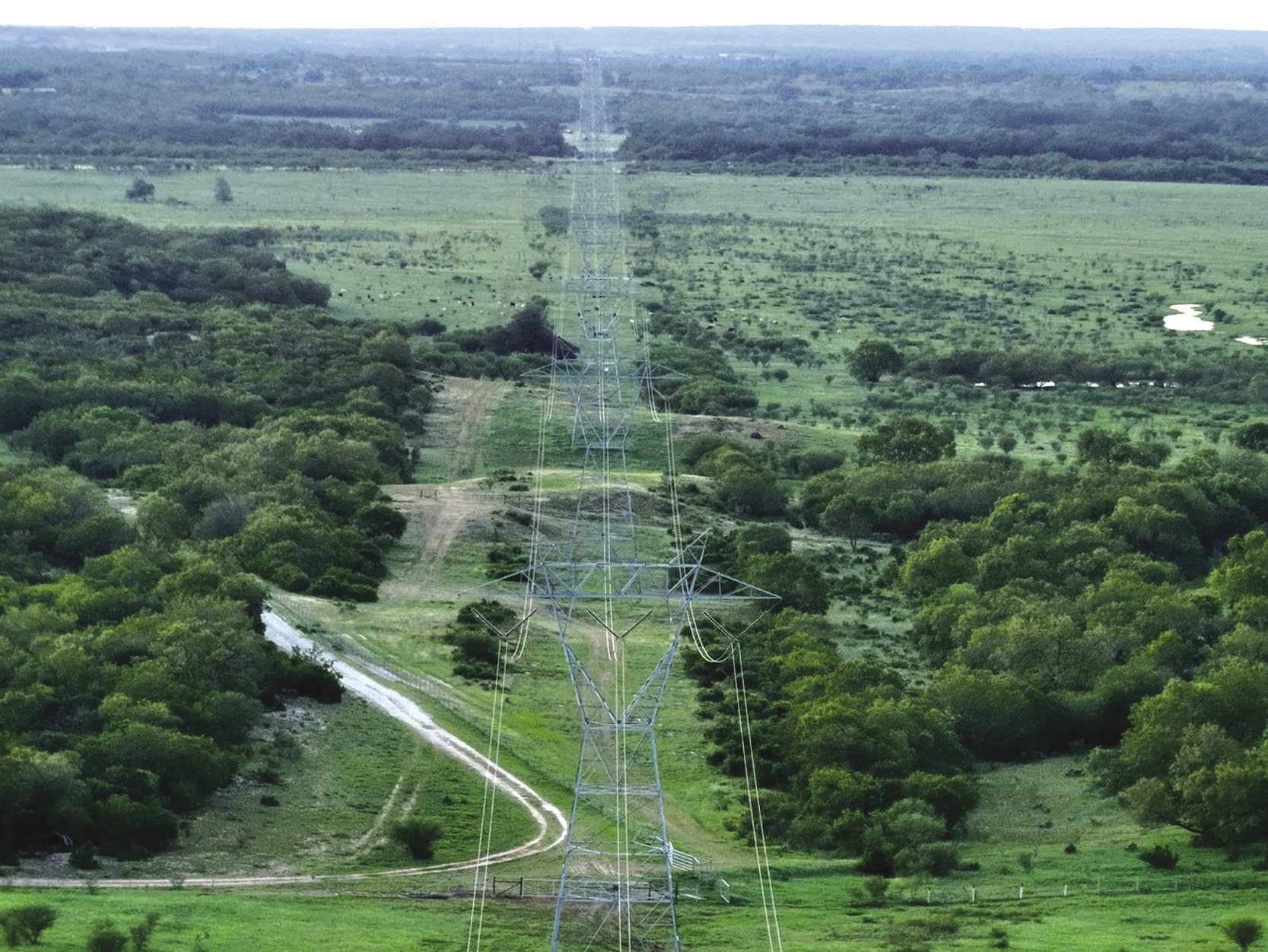
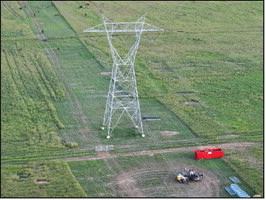
In the first series, we discussed the pros and cons of transmission lines as related to land value and aesthetics. Land values can be dramatically impacted by transmission lines and may be negative if you are selling land but positive if you are buying. Aesthetics mean different things to different people, so beauty is a matter of opinion.
In this series, we will discuss easements and habitat fragmentation.
Easement
The word “easement” in this context means a non-possessory interest in land, meaning the easement holder does not have ownership rights but can utilize the property in a defined way. An easement grants the entity the right to access and use your property within certain guidelines at their discretion. In the real estate world, landowners have what is referred to as “bundle of rights,” and those include the right of possession, control, exclusion, enjoyment and disposition. Basically, they define what the owner can do with their own property. An easement is a “carve out” or an exception to the landowner’s bundle of rights by giving away/ selling/agreeing to allow others to use the land for a specific purpose.
For example, one of the bundles of rights is exclusion. As a landowner, you can exclude anyone on your property, thus trespass laws, gates, fences, locks, etc. You are the gatekeeper literally and figuratively and so you can control who has access, when they can come in or even IF they can come in at all. But once you sign an easement, you give that right of exclusion up. In this case, you will give up your privacy and security to allow strangers on your property to clear the easement lane, to construct the facilities needed and to maintain and monitor those facilities for the life of that easement agreement. So pre-easement you are 100% in control of who and when people come onto your property. Post-easement, you give that control up to complete strangers, and they can come and go on your property as they see fit as long as it falls within the guidelines of that easement. This easement stays with the land for as long as the easement contract describes.
In this case, it is basically forever, meaning if and when you sell the property, the new owner/buyer must also abide by the easement contract. And this is one of the many ways it devalues your property because a buyer now no longer has the full bundle of rights. You had them to begin with, but once the easement is in place, you no longer have the full bundle and therefore you are selling less than what you originally had—the property now has fewer total bundles of rights attached to it forever.
Construction crews can enter your property day or night to begin clearing the land. Survey crews and engineer crews can enter your property to check on progress. Semi-trucks, giant cranes, brush grinders, cement trucks, huge generator trucks, light towers, etc, can all enter your property to work on this project on their schedule and not yours.
Once the construction is completed, service crews, repair crews and even aircraft can fly over your property at THEIR discretion and not yours. You have lost your privacy and security by allowing someone else to come and go onto your property as THEY see fit and so that will impact any buyer or potential owner because they are buying the easement too and few bundles of rights.
Habitat fragmentation
Habitat fragmentation refers to habitat/woodland/brushland that are broken into smaller, fractured, or isolated patches that becomes less useable. Fragmentation is like breaking a glass bowl—unbroken it is used to effectively hold and maintain what you put into it. It will be there for as long as you need it. You know what to expect. It is reusable over and over again, and it meets your needs. But if you drop that glass bowl and it shatters--or fragments--into pieces, it has lost its value and usefulness.
Habitat for wildlife is what your house is to you. What if your house was suddenly split open with a large gaping hole in the middle? Pretty much unusable, unsalvageable and so you have to leave it because it no longer fits your daily needs and requirements, right?
Same thing with wild animals and wild spaces. A block of trees or a block of brush is home to many wild animals. Could be songbirds, rabbits, quail, turkey, deer, etc but know that is where wildlife live. Habitat is what FEEDS wildlife—leaves, twigs, berries, mast, vines, and it provides protection from predators and inclement weather such as severe cold or hot.
When the transmission route is selected, the representatives of the company will want to reduce their overhead construction costs as a priority so they will value their cost savings over your wildlife and your habitat. They will tell you a straight line construction route will save them money and is much easier and quicker to construct, which all of that is likely true. However, their savings could be your loss.
For example, what if you do have a large grove of mature oak trees on your ranch. That grove of oaks is the only place that turkeys roost on your ranch, the best dove nesting habitat and has the highest populations of squirrels living in it. It also provides the darkest and best shade and protection against the hot summer sun and during an ice event.
If the transmission line company slices a huge gaping cleared line right through that grove, it becomes fragmented and far less useful to wildlife. Those turkeys, they will almost certainly leave your ranch forever and relocate to your neighbors. The doves can’t nest there now so your dove hunting success will certainly decrease into the future, which means decreased hunting income and/or enjoyment. The squirrel will population will certainly decrease so your squirrel hunting success will never be the same, and now that protective shelter from the hot sun and driving sleet and snow is gone forever. Where will your wildlife seek shelter now? They will have to relocate elsewhere or die. So the winner is the transmission line company because they saved time by constructing a straight line and they were able to finish construction under time and under budget, they win huge. But you? You lost your turkey, dove, squirrel and other wildlife that relied on, demanded and required that grove of oak trees for their daily survival. How much less is your land worth now without quality wildlife on it? Do you lease your hunting rights or allow friends and family to enjoy hunting? What is the value of that hunting and outdoor experience to you either financially, ethically, morally or family heritage wise? Habitat fragmentation is critically important if wildlife is important to you.
Remember the first conversation we had about goals and objectives in the fist installment? Does easements and habitat fragmentation and loss of wildlife help you or hurt you in reaching those goals and objectives? Currently you are in control of your land and its future. Will the next generation, and future generations, be proud of the decisions you made today?