
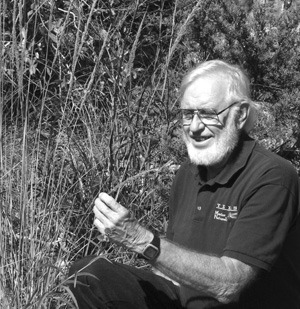
Growing up in the country in the Permian Basin between Lubbock and Midland, I spent a lot of time roaming the pastures around our house, although much of it was being plowed up to make new cotton fields back then. But the time I spent in the mesquite/ shinnery/short grass prairie was so much fun because of all of the critters I could see.
I lived away from Texas for a number of years, but when I returned several years ago I was saddened to find that many of the critters I enjoyed as a boy have become much less common. Some are even quite scarce and becoming more so.
As a kid I could almost always walk around for a little while and find a Texas horned lizard. We called them “horny toads” back then. They were easy to catch, fun to play with, and I always let them go where I found them. They were fun to watch picking ants from around a harvester ant hill. Both the harvester ants and the horned lizard have largely disappeared from most of Texas.
Cottontails and jackrabbits used to be much more numerous. A short walk through the pasture in midday when they were resting in the shade could always result in flushing at least one of my favorite animals. A drive down a country road at night would frequently show more than one in the headlights at once. They are still around, of course, and they are not threatened like the horned lizard, but their numbers are much reduced.
At one time when I was a kid I collected 13 box turtles and kept them in a pen my father had used to raise pheasants. One of them even laid eggs, and I had several baby turtles. Box turtles are nowhere near as common as they used to be.
My favorite bird used to be the mourning dove. I think it was because I learned to mimic their call and could sometimes call one up. Back then mourning doves were quite common, but if people wanted to hunt white-winged doves, they had to travel to Mexico to do it. Now it appears that white-winged doves have expanded their range and have out-competed our native mourning doves.
Quail of all species, especially scaled and bobwhites have declined dramatically in the past years, to the point where seeing, or even hearing one is a rarity for most of us. You don’t have to be a hunter to mourn their loss.
I have seen many fewer field mice and rats in recent years than I remember from when I was a kid, nor do I see any sign of either of them very often.
I had always assumed that the Hill Country would be ideal habitat for rattlesnakes, and expected to see a lot of them when we moved here. But in fact I have seen very few, in spite of walking many miles over hundreds of properties in the past several years. I know there are localities where they are relatively abundant, but I don’t think they are nearly as abundant as they were where I grew up.
Coyotes also seem to be less plentiful now than in the past, at least as judged by the few sightings or hearing their calls or seeing roadkills. This may be due largely to trapping that occurs to protect sheep and goat raisers.
So what caused the changes in these and other animal populations? I think the short answer is “us.”
As the human population has increased, we have begun to occupy more and more of the habitat these animals used to have available to them. We have also destroyed or degraded otherwise native habitat by our land use practices. Overgrazed ranges are less favorable wildlife habitat. Increased cropland acreage as well as cultivated “improved” pastureland are poor habitats for just about everything.
Removing predators has increased native deer populations which have destroyed or damaged habitats for other wildlife. Introduction of alien species from fire ants, to exotic ungulates to feral hogs and cats certainly have had some negative effect on some wildlife.
The bottom line is that by far most of the decline in the numbers of most of these native animals, just like the cause of most species extinction, is loss of habitat caused by humans. I think it is sad that today’s kids can’t experience the number of wild critters that I did.
Until next time… Jim Stanley is a Texas Master Naturalist and the author of the book “Hill Country Landowner’s Guide.” He can be reached at <jstmn@ktc.com>.