
Erosion: Where an Ounce of Prevention is TRULY Worth a Pound of Cure
When most people look at a piece of property with the idea of buying it, living there, retiring there, they usually consider the terrain, the trees and shrubs, the grasses, maybe whether there is a creek or pond or perhaps a beautiful view. But almost no one thinks about the most important aspects of any property—the soil.
Without soil, you can’t have plants, without plants you can’t have animals. Without soil, plants and animals, you just have a pile of rocks. If you have soil, even the most overgrazed, overbrowsed, abused land can, in time—perhaps a lot of time—be made into a healthy, functioning landscape.
Much of what used to be soil in Texas now resides in the Gulf of Mexico, due to erosion, primarily water erosion. A certain amount of erosion has to be considered a natural geologic process that has gone on for millions of years— it’s what reduces mountain tops and fills in lowland areas with deep soil. It’s the accelerated, human-caused erosion that we have to be concerned about.
Soil is composed of a mixture of air, water, dead organic matter, living organisms and mineral matter. The mineral component of soil is the largest component and it comes from the degradation of rocks caused in part by the natural forces of erosion, so soil is actually created by natural erosion, but this process is extremely slow. An inch of soil takes thousands to hundreds of thousands of years to form. So replacing soil once lost is not going to happen in our lifetimes.
But we can lose the soil in a very short time. It may be difficult for us now to think back to the last good rain, but one heavy rainstorm can cause significant loss of soil. If you think this is a new discovery, consider this: “For the fact is that a single night of excessive rain now washes away the earth and lays bare the rock. Now the land is losing the water, which flows off the bare earth into the sea.” –Plato, 400 B.C.
When many people think of erosion, they tend to think of drainage ditches along country roads, creek banks, gullies and other features where water runs during rainstorms and where there is or has been loss of soil. While these are not unimportant areas of erosion, some amount of this kind of erosion is inevitable—you can’t fight the terrain. And many of the attempted solutions just make matters worse.
The type of erosion we should be mostly concerned about is called “sheet erosion,” and it consists of water flowing across the land picking up soil and flowing downhill into the creeks and gullies mentioned above. This is where the erosion starts, this is where the general loss of soil takes place, and this is where we can stop it.
Erosion generally starts with bare ground. Raindrops are said to hit the ground at about 20 miles per hour, which is enough force to dislodge small particles of soil. These soil particles then become suspended in the water and as the shallow sheet of water flows downhill it carries the soil with it. If there were no bare ground, the raindrops would fall on vegetation or leaf litter, so the soil particles would not be dislodged and the amount of soil carried away would be many times smaller.
The suspended soil particles will not stay suspended indefinitely, but are kept in suspension due to the motion and turbulence of the flowing water. If the water were slowed down in its flow downhill, then at least some of the soil particles would drop out of suspension. Native bunch grasses are really very effective in slowing down the sheet flow of water across the land, so they greatly reduce the amount of erosion.
It turns out that a good stand of native grasses is the best thing you can have to prevent erosion. The grasses intercept the raindrop, reducing the amount of soil dislodged, they slow down the flow of water, further reducing the amount of soil carried off, and furthermore, water infiltrates into the soil better under native grasses, thus reducing the amount of water runoff and therefore, the amount of erosion. Any vegetation is better than nothing, but native grasses are the best to prevent erosion.
So, grow more grass and prevent erosion.
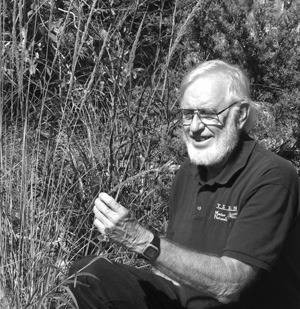
Until next time… Jim Stanley is a Texas Master Naturalist and the author of the books “Hill Country Ecology,” “Hill Country Landowner’s Guide” and “A Beginner’s Handbook for Rural Texas Landowners.” He can be reached at <jstmn@ktc.com>. Previous columns can be seen at <www. hillcountrynaturalist.org>, or at Riverside Nature Center at <https://riversidenaturecenter. org/past-blogs-from-a-friend/>.