
Some plants that might not be eaten by deer.
Last week we talked about the fact that which plants deer will eat depends largely on how many deer are in the area and what else there is to eat. I don’t like to use the terms “deer-proof” or “deerresistant,” because these terms imply that the plant is unlikely to be eaten wherever it is found, which may not be true. However, to improve the chances of having plants not eaten by deer, it helps to plant species that are not favorite deer foods, but are things deer find somewhat less palatable.
So, with the caveat that anything I include here may indeed be eaten in your yard, I believe these plants are less likely to be eaten in most areas. But if you plant something on my list and it disappears, don’t blame me!
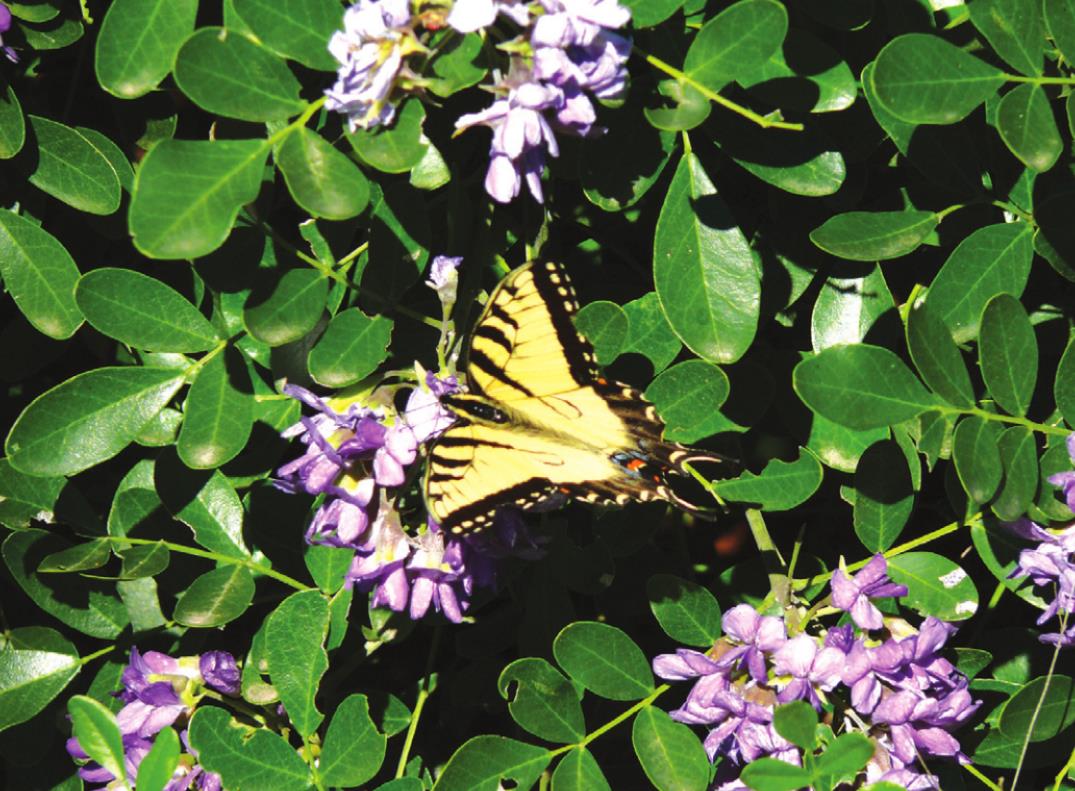
For shrubs, in moderate to low deer population areas, cenizo, evergreen sumac, and Mexican silktassel (all evergreen shrubs), are probably safe to plant, but in higher population areas, they may well be browsed. Shrubs lessfavored by deer would include Agarita, Damianita, Flame leaf sumac, Skeleton-leaf goldeneye, Texas (native) lantana, Texas mountain laurel, Texas persimmon and Yellow buckeye.
For flowering perennials, the least favored would be Cedar sage, Lindheimer senna, Maximilian sunflower, Mealy blue sage, Mexican hat, Mountain pink, most Milkweeds, Prairie verbena, Tropical sage (Salvia coccinea), Silverleaf nightshade, Simpson rosinweed, Snapdragon vine, Snow-on-the-mountain, Frost weed, Wood betony, Twoleaved senna, and Turk’s cap.
Annuals that are usually not eaten include Cowpen daisy, Mullein, Purple horsemint, Scrambled eggs and White prickly poppy.
Native cacti and succulents are not usually bothered by deer. Native prickly pear are safe from deer as are the native claret cup, strawberry cactus and lace cactus. Most yuccas and agaves are unlikely to be eaten, although the flower stalk that many of them put up in the spring seems to be a favorite treat for deer. Two native succulents, Beargrass (Nolina texana) and Devil’s shoestring (Nolina lindheimeriana) are not eaten, but again their flower stalks may be.
I think it is best to assume that any native hardwood tree will be eventually eaten by deer. These animals obviously prefer some trees to others, but in the five to 10 years between the time when you buy a tree in a small pot and it grows to a height such that the deer can’t reach most of the leaves, the deer will almost certainly at last nibble on it occasionally. So if you are planting a tree that is not in an enclosed yard, it will need to be caged for several years.
Grasses, on the other hand, are almost never eaten to any significant extent, with the exception of very tender shoots such as on annual ryegrass. So planting some of the larger native grasses such as Big bluestem, Little bluestem, Switchgrass or Yellow Indiangrass (the “Big Four” of the tall grass prairie), is completely safe. Also, lower growing grasses that can be attractive include Inland seaoats, which will be eaten in the open but may be safe in a flowerbed.
It is important to note that not all failures to grow new plants can be blamed on deer. Humans with weed-eaters, lawnmowers, herbicides, or fertilizer have been known to do in a lot of new plantings.
It is also important to emphasize that ALL newly-planted plants need to be watered until they are well established, meaning that their roots have grown out of the original dirt ball and into the native soil and have achieved a large enough root mass to support the top growth even in a drought. So, it is important to keep the ground around the plant moist, and don’t let a little 0.1” rain fool you into thinking that light shower did anything for the plant.
Furthermore, it is important to point out, especially for our new residents, that the time for planting any of these plants in the Hill Country is the fall, September to November. Tying to plant anything in the summer is asking for trouble.
Many of the plants listed above can be found growing at Riverside Nature Center. While there, you might pick up a blue brochure published by the Kerrville chapter of the Native Plant Society that will give you descriptions of many of these plants. Most of the plants listed should be available at local native plant nurseries.
Please note that all of the above is offered as my best advice, but certainly without any guarantees that some of the things I suggested won’t be at least nibbled on.
Until next time…
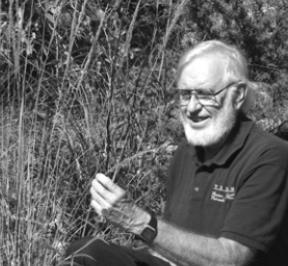
Jim Stanley is a Texas Master Naturalist and the author of the books “Hill Country Ecology,” “Hill Country Landowner’s Guide” and “A Beginner’s Handbook for Rural Texas Landowners.” He can be reached at <jstmn@ktc.com>. Previous columns can be seen at <www.hillcountrynaturalist.org>, or at Riverside Nature Center at <https://riversidenaturecenter.org/past-blogs-from-a-friend/>.