
By Lesley Henton, Texas A&M University Division of Marketing and Communications
A newly discovered cellular stress-protection system may help tumors withstand chemotherapy, pointing to a new strategy for more effective treatments.
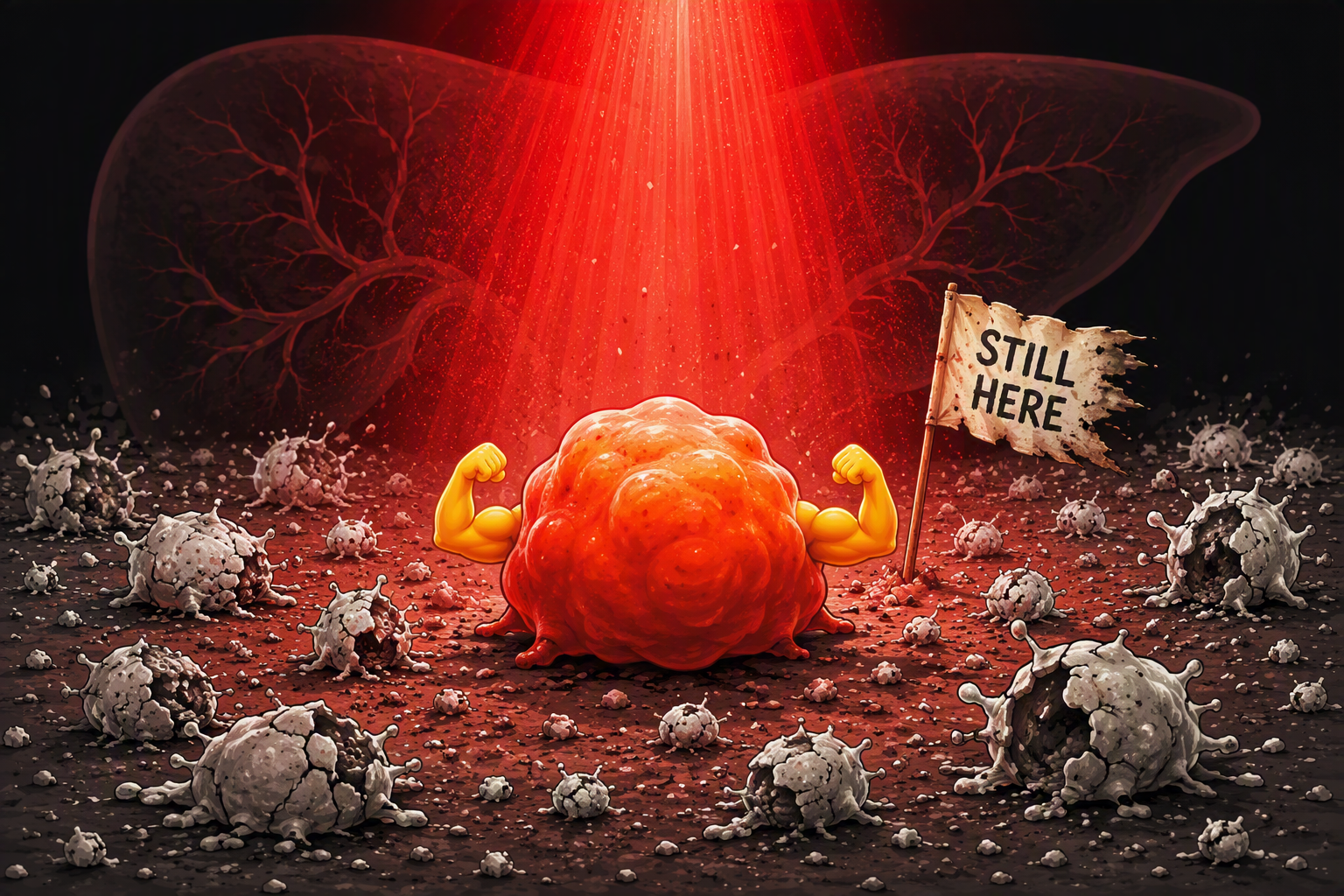
Many cancer treatments work by exploiting weaknesses in tumor cells, overwhelming their ability to survive, repair damage or continue growing. Yet some cancer cells manage to survive treatment. A new study from Texas A&M University sheds light on one reason why: some cancer cells have a survival toolkit.
The research team, led by Dr. Wenshe Liu, Regents Professor and Harry E. Bovay, Jr. Chair in chemistry in the College of Arts and Sciences, has identified key components of a little-understood cellular pathway that appears to help cells cope with oxidative stress, a form of molecular damage triggered by normal metabolism — and many cancer treatments. The study suggests that blocking this protective system could make certain therapies more effective against cancer.
The team published its findings in Nature Communications.
A hidden pathway revealed
Researchers focused on a protein called URM1, which has remained something of a mystery despite being conserved across evolution, from simple organisms such as yeast to humans. Scientists already knew URM1 plays a role in helping cells respond to stress, but the molecular machinery that controls the pathway in human cells had not been identified.
“This pathway has been retained across species for hundreds of millions of years, which suggests it serves an important biological function,” said Liu. “Our findings reveal how the pathway is activated in human cells and establish the molecular players that make it work.”
To uncover how the system operates, the researchers developed a specialized molecular probe capable of capturing proteins involved in URM1 activity. Using that tool, they identified two enzymes, NAE1/UBA3 and UBE2M, that drive the URM1 modification process in human cells.
The study showed that disrupting either enzyme sharply reduced URM1 activity. The same effect was observed when cells were treated with compounds that inhibit the enzymes, providing additional evidence that NAE1/UBA3 and UBE2M serve as central regulators of the pathway.
The team also found that oxidative stress strongly activates URM1, placing the pathway among the cellular systems that are mobilized when cells encounter damaging conditions. Together, the findings provide the clearest picture yet of how the URM1 pathway is activated and controlled in human cells.
Why the discovery could matter for cancer treatment
Many anticancer drugs work, at least in part, by overwhelming tumor cells with damage and oxidative stress. Understanding how cells adapt to those conditions could reveal new ways to make treatments more effective.
To explore that possibility, the researchers examined what happened when the URM1 pathway was disabled. Cells lacking URM1 activation were significantly less likely to survive oxidative stress than normal cells, suggesting the pathway helps buffer cells against damage.
“These results suggest that URM1 helps cells withstand stressful conditions,” Liu said. “If we can selectively interfere with that protection in cancer cells, we may be able to improve the effectiveness of treatments that already rely on generating stress inside tumors.”
Because drugs that target NAE1/UBA3 are already being investigated in cancer research, the findings raise the possibility that existing therapeutic strategies could also affect the newly identified URM1 pathway. The researchers say additional studies are needed to determine whether targeting the pathway can enhance cancer treatments while minimizing effects on healthy cells.