
Part Two
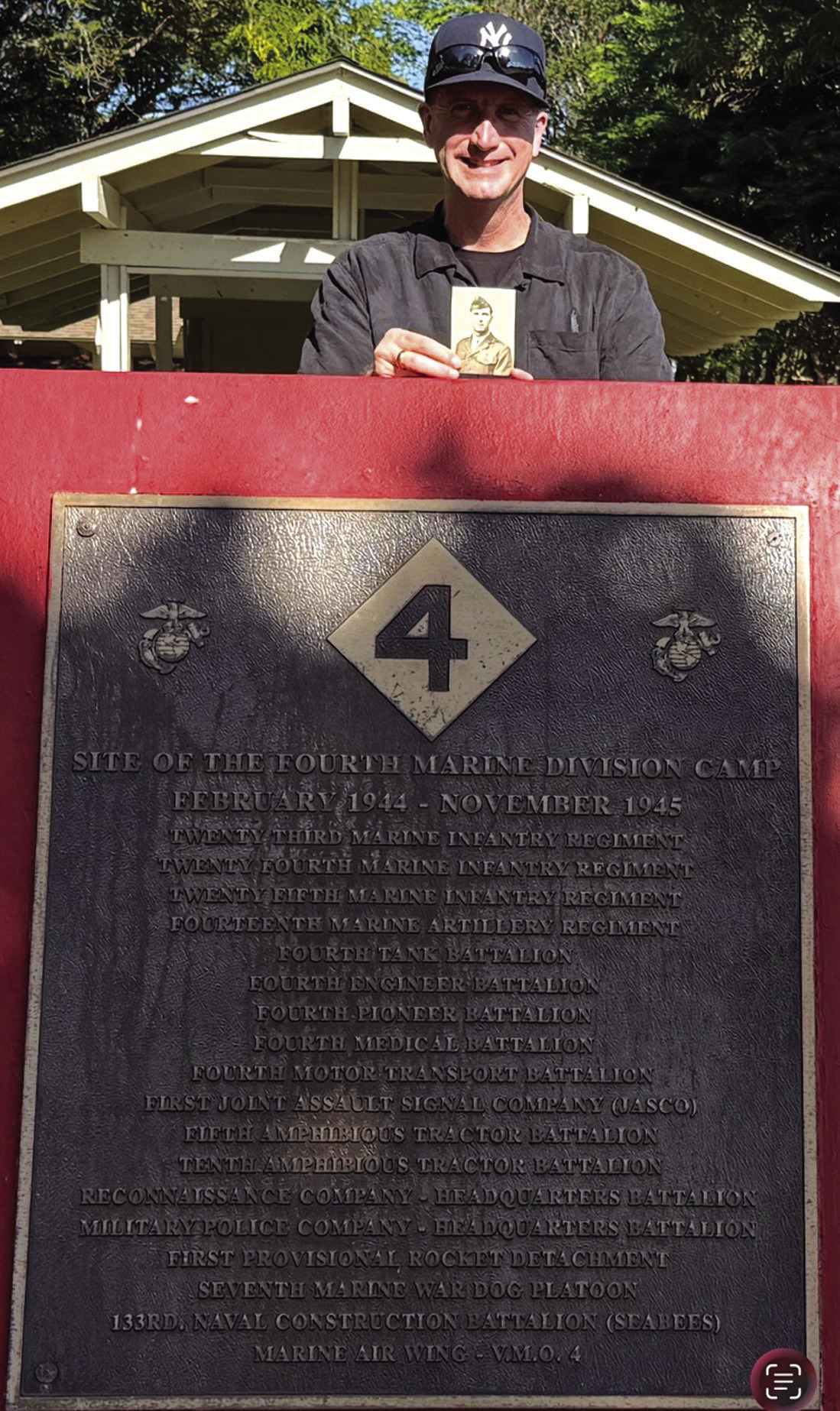
I was promoted to private first class on 28 Dec 1943, and, as if it were some sort of a reward, I was put on a ship bound for Hawaii. Having survived the trip across much of the Pacific Ocean, we finally docked alongside one of the piers at Kahului Harbor, on Maui’s northcentral shore. I was certain that I could quickly get used to clean beaches, pretty girls, and a plethora of recreational activities. After climbing into the trucks waiting nearby, we convoyed uphill along winding, muddy roads. Plenty of children were cheering, and many of the adults waved small American flags. After passing through the small town of Makawao, we headed to Camp Maui, which was to be our new home while we conducted our training. Upon arrival at the camp, we were told that we were Maui’s Marines now.
Given that there were more than 2,000 tents all lined up in uniform rows, we quickly understood why they called the place Camp Maui. The absence of actual barracks was obvious, but I thought it would be rather refreshing to camp outdoorsjust like I had done many times at the Methodist church camp each summer. There were some typical military buildings on the premises, and we became acclimated to the lay of the land rather quickly. It was evident that I’d be trading Pa Millican’s pecans and Ma’s fried chicken and biscuits for what appeared to be an endless supply of fresh coconuts, papayas, mangoes, and bananas. With sugar cane fields all over the island, the Coca-Cola seemed to taste even better than back home. Catching a breather under the profusion of palm trees was quite refreshing as the swift island breeze tore through our sweaty shirts. The vibrant purple color of the jacaranda trees matched the radiant colors of the plumeria plants, making for a stunning sight. It felt as if we were truly in paradise, but it weighed heavily upon us, knowing that we had a big job ahead with the Japanese.
The fun didn't last long as I began preparing for my first combat mission. On 1 Feb 1944, I, along with my fellow Marines, disembarked at Kwajalein Atoll in the Marshall Islandsan island chain in the middle of the Pacific Ocean, several thousand miles away from Japan. I was part of G Battery, 3rd Battalion,14th Marine Artillery Regiment, 4th Marine Division. We successfully captured the islands of Roi-Namur, which had been held by the Japanese since World War I. Although we were victorious, I had lost more than 200 of my fellow Marines.
Seeing the carnage that war had brought in such an up-close-and-personal manner was terrifying, and I was glad to have survived physically unscathed. It was a pretty lopsided victory, as the Japanese lost several thousand men. We were feeling on top of the world as we headed back toward Maui on 5 Feb 1944.
There was time for some much-needed R&R (rest and relaxation) back at Camp Maui and in the nearby towns. However, we almost immediately began preparing for what was going to be a hell-on-earth battle as we planned to invade the island of Saipan in the Mariana Islands.
Receiving word from Pa that Felix had died on 13 Apr 1944 nearly ripped me to pieces. On the one hand, I had lost my best friend and close family member. On the other hand, I was more determined than ever to avenge Felix’s death and to do my part to end the Japanese government’s ambition for global dominance.