
A few years ago, I was traveling down a country road near the central Texas coast in a cool, driving rain. Lots of hawks migrate to that area in the winter, and there was a hawk on about every third telephone pole, or at least it seemed that way. What I noticed was that all of the hawks were sitting head to the driving rain, but bent over with their heads down so they presented the least resistance to the wind and rain. To this human, they looked miserable.
This got me to thinking about how tough animals are in terms of living outside, year round, in all kinds of weather. Of course, many years ago, our ancestors lived pretty much the same way, but we modern humans would be hard-pressed to live like that again.
Think about it. All of our native birds and other animals have to brave the elements 24 hours a day, 365 days a year. This means not only do they have to survive in the hottest days and the coldest nights outside with very little 'cover' or 'shelter,' but they also have to find food and/or avoid predators under all of those conditions. They also have to raise young under those conditions.
We talk about native animals needing shelter, in addition to food and water. And when we say that, we are usually thinking about some area of dense vegetation, like a dense evergreen shrub or a cedar brake. But how much 'shelter' do you think we would consider a cedar bush on a cold rainy night?
Of course, many small mammals have some kind of den, at least part of the year, which must help. But many such animals only have permanent dens while rearing their young and are otherwise somewhat nomadic, thus without any permanent shelter. In our part of the country, few animals truly hibernate. Some do, however, hole up in a shelter for a few days during really bad cold spells.
Another aspect of living outside all year long is that the animals or birds have to do so with only one 'coat.' Certainly some animals shed summer 'coats' for winter coats, and birds similarly molt to get new feathers, but the difference between hot weather and cold weather attire is pretty minimal. So whatever they 'have on' in the heat of the day is all they have in the middle of the night as well.
I have often been puzzled as to why on especially cold and/or rainy nights, birds don't take advantage of 'artificial' shelter, such as coming up onto our back porch to get out of the rain and the wind. But then, I am also pretty certain that birds don't generally use nest boxes as shelter after the young have fledged either. It is obviously not in their DNA to think about being uncomfortable and to look for solutions to that problem.
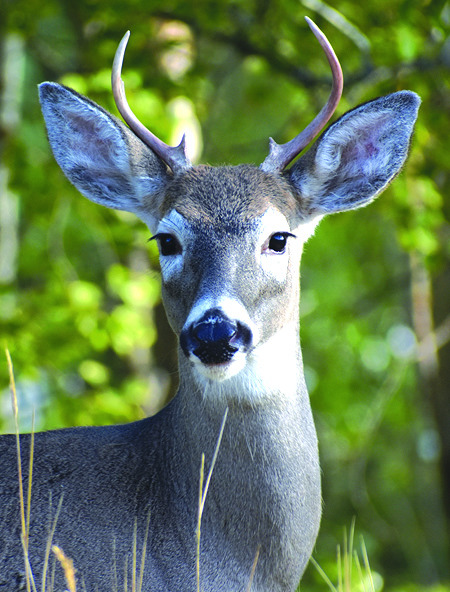
If animals appear somewhat stoic to us about the discomfort of weather conditions, they appear equally so about injuries or illness. I have seen, on more than one occasion, deer with severely broken legs, including compound fractures, survive for long periods of time. I have even seen does survive a winter and give birth to twin fawns and raise them all the while hobbling around on three legs and an open wound. I am not suggesting that they don’t feel pain as much as we would, but that they seem to be able to cope with the situation and survive under adverse conditions. Of course, in areas with major predator populations, such an animal would not survive.
There is not a whole lot we can do to help our native animals survive inclement conditions. Providing brush piles and maintaining or planting vegetative cover will obviously help some, even if these are not the kinds of shelter we would consider useful. Allowing hollow trees and dead snags to remain standing certainly provides shelter for small animals and birds.
Providing food and water for the birds, especially in the winter, is obviously a great help as small critters like songbirds need to eat large amounts of food in order to maintain their body temperature.
Until next time…