
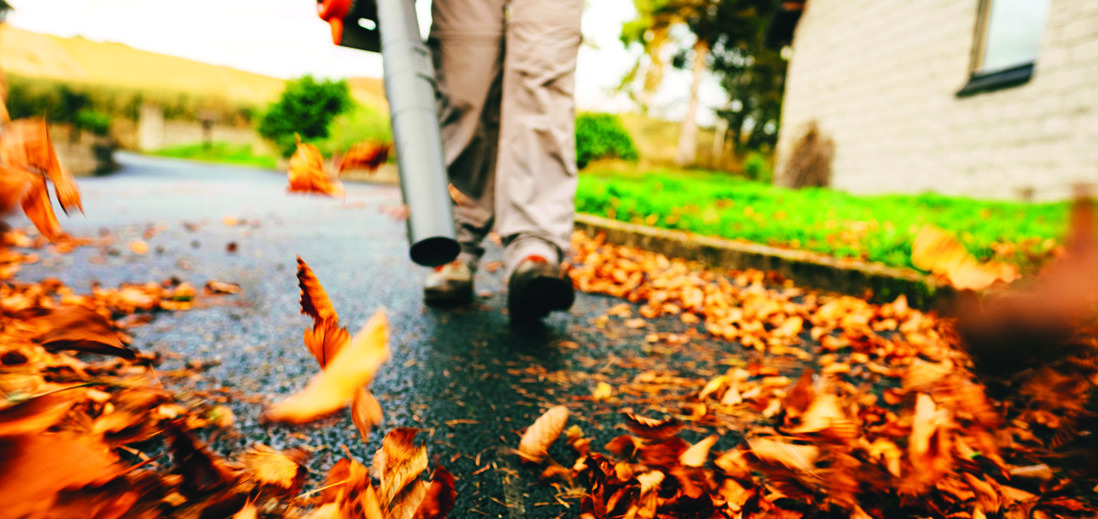
When I was a kid growing up in the High Plains of the Permian Basin where there are no real native trees, all we had was one Chinese elm in the yard. So I didn’t grow up with the habit of raking leaves in the fall. Then when I moved to the Northeast, we lived in and were surrounded by a forest of very tall oaks, hickories and maples, so we had lots of leaves fall on our lawn, driveway, and flower beds. We had two choices back then, haul them all up a pretty steep driveway to the street and let the city haul them away or take care of them on our property.
Partly because we knew that throwing the leaves away was throwing away much needed organic matter and nutrients and partly because hauling them up to the street would have been a lot of hard work, we chose to use them on our property. Most of the time, we would rake the leaves into rows or small piles and run the lawnmower over them several times to chop them up into smaller pieces, and then use the chopped up leaves to spread on flower beds to prevent freeze damage to some of the plants and return organic matter to the soil. What we didn’t use in that way we put in a huge pile to compost.
Since we moved back to Texas, we don’t have near the volume of leaves that we had back in the NE, so it is never that much of a chore. Usually in areas under trees where there is little if any “lawn” because of the deep shade, we just leave the leaves under the trees. Sometimes we rake some of the leaves up to spread over flower beds to help keep the soil from freezing and keep moisture in the soil during the winter. This also returns organics and nutrients to the soil for the microorganisms in the soil to help return to the plants in the spring. (If you have a low faucet or anything else you want to protect from freezing, a pile of leaves makes a pretty good insulator.)
My philosophy of gardening is to try to mimic Mother Nature as much as possible. Mother Nature doesn’t rake leaves. In fact, the health of the woodland part of our Hill Country is partly because of leaves falling under the trees, covering the ground to protect the top inch or so from freezing and from drying out, shading the soil in the summer, and providing habitat for all kinds of beneficial insects, skinks, lizards and toads.
Of course, if you have a city/ suburban type lawn, especially if it is St. Augustine, you don’t want leaves covering it during the winter as this might allow mold to grow on your lawn. In some cases where the leaf cover is thin, if you can set your lawnmower to mulch you can grind up the leaves fine enough to fall down between the grass blades which should be OK. Or you can make compost piles with the leaves, chopped up or not, to give you compost next year. Most of the time to be successful around here, compost piles should to be watered occasionally and to have some different kinds of plant material.
Mowing the lawn at a higher setting than usual in the fall allows the slightly taller grass to better protect the soil during the winter in the same way that the leaves do. If you have native grass around your property that you want to mow, I suggest you set your mower at as high a setting as possible and mow in late December or January. Most wildflower rosettes should still be low to the ground and the grass will not have begun growing much in that time frame.
Think of keeping leaves on your property as one more thing to recycle, along with cans, bottles, newspaper and cardboard. None of our natural resources are so abundant that we can afford to waste them. Buying ground up trees to use as mulch doesn’t seem to make as much sense as using free, recycled, natural leaf mulch.
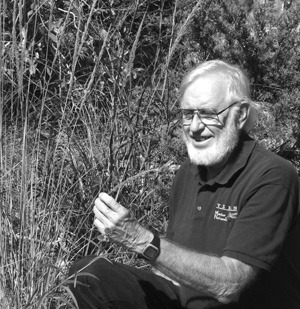
Until next time… Jim Stanley is a Texas Master Naturalist and the author of the book “Hill Country Landowner’s Guide.” He can be reached at <jstmn@ktc.com>. Previous columns can be seen at <www. hillcountrynaturalist.org>.