
The vault of information on the Texas Screwworm Threat is updating every single day. Macy Ledbetter from Spring Creek Outdoors, LLC reached out to us with lots of important information to share with our readers.
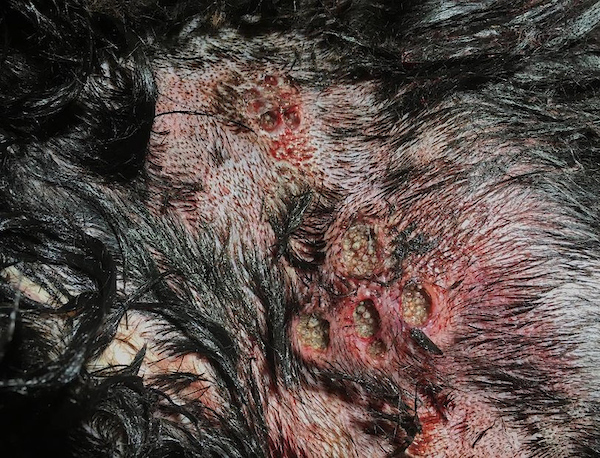
The screwworm threat is very real, and if you are 70 years old or older, the results could be exactly as you have already witnessed growing up. There is no guessing here; we know exactly what to expect when they arrive. The Mexican state of Tamaulipas adjoins Texas and has hundreds of confirmed cases in the southern region with northward weekly advancements--it is getting closer to Texas every week. Texas is not prepared at all. Historically, the only screwworm producing facility was in Mission, Texas, down in the valley, but it has since long been closed and the ONLY facility producing the sterile male fly is now in Panama. Because of drug cartel demands and the new Mexican President not wanting state officials to work on Sundays and new tariff/trade issues, the screwworm has escaped north of the Isthmus of Panama and now entered Mexico and headed towards Texas. The US helps fund the Panama production facility, and this is why President Trump asked the President of Mexico if she wanted US military assistance—to help counter the cartels in that spot because it was the cartels that helped stopped the planes from flying overhead and Mexican officials wanting to impose more taxes on those US imports (chemicals used, planes, equipment, etc). So, the trade/tariff wars, drug cartels and Mexican officials created this mess, and now the fly has escaped the narrow Isthmus and is headed towards Texas.
It is my estimation that we are out of time to produce the required sterile male flies because it takes about 700 million male flies PER WEEK to be effective with seven days per week air drops (according to history). We can’t produce enough female flies to produce that many eggs, sort the eggs, sterilize the males, box them and then distribute them in time, so the second best and ONLY other option is to begin treating the larvae stage, until such production can be reached. This is not ideal and won’t be the long-term solution, but rather the best short-term, stop-gap effort used simply to buy enough time in order to hold the line while the facilities and flies are produced. The male sterile fly is the only long-term solution, but we don’t have that option now because we are out of time. The USDA does not recognize or have powdered Ivermectin listed on their approved list, and that is the problem. However, THEY (USDA) are using it right now, and since 2018, in south Texas on corn to help combat the cattle fever tick. So, they use it themselves to stop the tick spread all over the valley of south Texas but are so far unwilling to allow feed manufacturers the ability to use it in pelleted or corn feeds to help with the screwworm—thus the need for President Trump to step in and apply common sense. Secretary of Ag Brooke Rollins is a rancher from Texas, and she too gets it. They all are working on it right now, but I am not confident they have the timing down well enough. Again, the call for action is to force the USDA to allow feed manufacturers to use the powdered Ivermectin in feeds to use as a short term, stop-gap, emergency basis in order to buy the time needed for the facilities to begin growing enough female flies to produce enough male flies to be effective.
The Ivermectin is stored in the fat in the cell walls of living tissue. The female fly lays up to 300 eggs in ANY wound opening on any living mammal—rabbit, squirrel, feral hog, deer, cow, horse, your dog, your cat and even humans—anything that bleeds basically. The larvae hatch and, unlike any other maggot, begins feeding on LIVING TISSUE, not the mucus or exudate drainage of a wound, but instead the actual living flesh of it. The maggots feed “head down” meaning they bore deeper and deeper into the wound searching for healthy living flesh, thus they literally eat the host animal alive from the outside inward! When Ivermectin is stored in the cell walls, the maggots die when they ingest enough of the Ivermectin and they begin to die. The maggot carcass may or may not fall out of the wound because they “screw” into the host tissue and so the carcass now becomes another issue—infection. The dead and decaying maggot carcass creates a bad smell and a weeping wound, and that too attracts other female flies to lay even more eggs on the open, weeping, wound. So Ivermectin is NOT the best way to treat this issue because infected animals still may die if the wound cannot be cleaned, maggot carcasses removed if they remain inside and the wound allowed to dry and scab over and heal; however, Ivermectin-type treatments (Ivermectin, Cydectin, Detromax) are the ONLY way for now. Again, the sterile male fly is the answer, but we don’t have the time or ability right now.
A simple tick bite is enough of an opening in the skin to allow the female fly to access the body and deposit eggs. A scratch or any type of break in the skin is all that is needed. Could be a cut on the ankle, the knee, etc., and the fly now has an opening to use for egg deposits, and the cycle begins. The easiest and most obvious wound site is the naval of newborns. The flies attack the naval area, and the young are consumed from the belly up, outside to inside and die a horrible death. If, during the birthing process, the female has any tears or wounds, the maggots enter her from the back end and start eating her from the backside forward, outside inward. So, the first thing noticed will be a severe drop in production (fawns/calves, etc) and then a reduction of females. The males will become very susceptible as they shed their velvet which will also attract more flies to themselves, but the larvae cannot eat hardened antler. But if they are attracted to the specific animal, they have access to any wounds they can find. Once the male starts thrashing trees and bushes and creates any injury opening, he is very susceptible. During the pre-rut phase, how many cuts will he get on his legs and head/ear/neck area? Any injury is an invitation. But eventually, he will shed his antlers, and those two huge open holes on his head will be a problem. He can’t lick them to clean them, and it is directly over his brain so it won’t take long at all for a quick and decisive death.
Domestic animals can be penned, inspected, treated and even managed around the fly but only if enough labor and facilities exist. Breeding schedules, castration, dehorning, branding, facility fogging/misting/spraying can all be managed around the fly and to more easily treat for fly prevention and injury treatment. But not wildlife, we cannot do anything right now about or for wildlife, nothing. Endangered species, desert bighorn sheep, ocelots, highly prized exotic species, all the way down to squirrels and rabbits can be severely impacted without treatment. But if we can utilize Ivermectin in feed, we MAY be able to slow things down, MAY be able to help more survive. So, feed additives are not the answer; feed additives are the band aid simply and only to use to buy enough time for the sterile male fly production to be used to solve the problem once again and hopefully once and for all.
As a population biologist, I surmise we need at least 15% of the whitetail deer population to survive for natural restocking. In the 1950’s and 60’s, the deer herd was decimated from screwworm and drought conditions, so TPWD restocked most of Texas using deer from along the Texas Gulf Coast where the winds were such that fly impacts were minimal. I have the restocking records for San Saba County, and it included releasing 26 buck and 36 does over a six-year period to restock the whole county. Does were protected for a full 20 years before surplus, huntable populations of deer existed! You will also recall all counties in Texas were one buck only harvest counties until the mid-1980’s when two bucks were allowed, again, as population surpluses were finally realized from the restocking effort. Because of the current hyper over-reaction of Chronic Wasting Disease, restocking likely will not be used unless something significant changes, so that means if we cannot save at least 15% of the wild deer in Texas, restocking naturally will certainly take more than 20 years to accomplish, meaning you may not have another hunting season for whitetail deer (or any other mammal game animal) for at least two decades if history is to repeat itself.
So, this Ivermectin feed additive is a “Hail Mary” of sorts just to save enough animals for restocking should the level of infection intensity of this impending fly invasion repeat itself. And again, this is just to buy time until the new screwworm facilities and flies are produced in enough volume to eventually solve the problem. So, realize that this situation could be really, really bad if it reaches anywhere close to the same level of outbreak as it did the first time around. We are currently not prepared so we must brace for the impact.
You can find more updates from Macy on the subject on the Spring Creek Outdoors, LLC Facebook page.
See New World Screwworm fact sheet for information from Texas A&M Agrilife Extension