

Jim Stanley / Texas Master Naturalist Author of “Hill Country Landowner’s Guide” jstmn@ktc.com
We have all seen the fertilizer ads and the lawn mower ads, and many of us have lived in suburbs where everyone had manicured lawns like in the ads. It is not clear how modernAmericans have come to regard such unnatural monocultures as the ideal, but it is clear that such landscapes are not natural.
Mother Nature doesn’t grow single species of grass in wide expanses, devoid of other grasses, weeds or flowers. She doesn’t own a lawnmower either. Sure, there are grazing animals, but they each pick and choose what to eat, leaving some plants and nibbling others, all of which increases the diversity of flora in Mother Nature’s “lawn.”
You don’t see any dead limbs or oddly-shaped shrubs in those TV ads either. Our sense of “neatness” forbids that too. But Mother Nature doesn’t own a chain saw or pruners either. Dead limbs, strange-shaped trees, and irregularly spaced trees are all part of natural landscapes.
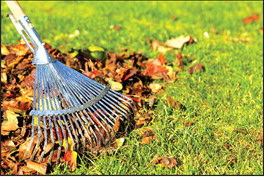
And guess what. Mother Nature doesn’t own a leaf rake either. So in the fall when all the humans are franticly raking up every single leaf that falls on that beautiful lawn, Mother Nature gets to rest and enjoy the colors.
If we humans had the same sense of aesthetics as Mother Nature, the fertilizer companies might be in trouble, but we would have a lot less yard work to do.
Of course, this isn’t all about how much work we should do, but what is best for the landscape and the habitat around us. Spreading chemical fertilizer on lawns, and then giving the fast-growing lawns the additional water they require, is a waste of natural resources. But then the weekly mowing of the new growth and disposing of the clippings amounts to stuffing the leaf bags with dollar bills, since that is where the fertilizer nutrients and even some of the water goes. This might all be worth it if the result were a healthier habitat, but in fact the reverse is true. Large expanses of weed-free St. Augustine are home to almost no wildlife. And the soil below isn’t that healthy either.
If pruning every dead limb, felling every dead or misshapen tree, or raking up every leaf and twig and hauling them away or burning them were so beneficial, how is it that the trees and the shrubs and the weeds and the grass evolved to thrive in this country before we arrived and invented riding mowers, weed-eaters and chainsaws?
Obviously, none of us wants to live with a dead tree in our front yard, but a dead tree or a pile of dead limbs out in the “back 40” is just good wildlife habitat. And does it really make sense to rake off live oak leaves from a flower bed, and then go to town to buy mulch for the bed? Leaving leaves, limbs, and last year’s grass where they lay helps to return the nutrients contained in them to the soil, after they have served as much-needed mulch for a time, and while it may not be neat, it is nature’s way.
Mother Nature doesn’t own any bug spray either. I have been impressed with the minimal amount of insect damage we have observed around our house on our native flowers, shrubs and trees. I think I can count on one hand the number of times in the past 10 years that we have used any insecticide outside our house.And even some of those times, we have since learned, if we had just waited a few more days, the caterpillars would have turned into a cocoon and the plants would put up new leaves and all would be right with the world.
I know some people will disagree with much of what I have said here. But I also know that if more people practiced the kind of yard maintenance described here we would be using fewer natural resources and making a smaller footprint on the ecology of the Hill Country. If everyone would at least think about these ideas before doing what they have always done, that would be a start.
Until next time…..