
The Why, What, When and Where of Tree Planting
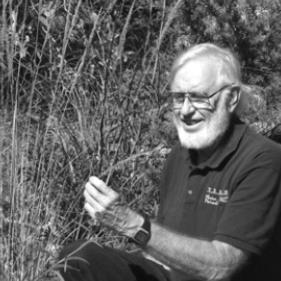
Why should we be planting trees? There are several reasons. Because the high deer populations prevent the natural replacement of older trees. They eat all of the root sprouts and saplings that are within their reach. Some small trees and shrubs are becoming scarce, so planting them ourselves helps assure the survival of the species. Planting new trees and shrubs adds to plant diversity and thus the quality of the habitat. Then there is carbon sequestration and lowering the temperature in the local environment. And of course, there is just the fact that most of us really like trees.
What kind of trees should we plant? There is a short answer: NATIVE, NATIVE, NATIVE. Native trees are adapted to our thin, high pH soil and drought-prone climate, and once established, need little or no care or maintenance. They grew up here, and they know how to make it on their own. Many non-native trees require more water, fertilizer, or other extra care than native trees. Also, some non-native trees become invasive by spreading uncontrollably and crowding out native vegetation.
So specifically what kind of trees should you plant? I have reduced a number of longer lists of recommended trees to two groups of reasonably available, successful and desirable trees you might consider. All of these trees are native to the Hill Country or to adjacent areas.
The trees followed by a W need to be in relatively wet areas, those with a D need deep soil, those with a G need good drainage, and those followed by an E are evergreen.
For large trees: bald cypress (W), bigtooth maple, bur oak, cedar elm, chinquapin oak (D), escarpment black cherry, gum bumelia, Lacey oak (G), live oak (E), Mexican white oak (Monterrey oak) (E), pecan (D), Spanish oak (Texas red oak), sycamore (W), Texas ash, Texas (little) walnut.
For smaller trees and large shrubs: Anacacho orchid tree, buttonbush (W), Carolina buckthorn, cenizo (G, E), desert willow (G), flameleaf sumac, goldenball leadtree (G), hop tree (wafer ash), Mexican buckeye, Mexican plum, Mexican redbud, Mexican silktassel (E), possumhaw, rough-leaf dogwood, rusty blackhaw, Texas mountain laurel (E), Texas persimmon, Texas redbud, and yaupon (E).
When should we plant trees? That’s easy. The most-preferred month is October. After that the preferred months, more or less in descending order, are: November, December, September, February, March and April. Don’t even think about planting in May through August; even if you manage to keep a tree wet enough so that it doesn’t die, it won’t be growing many roots until cooler weather anyway. This of course is contrary to the advice given in colder climates, where the winter is the most stressful period and the preferred planting time is in the spring.
Where should you plant your trees? There are two answers to that. First, plant it where IT wants to be. Don’t try to plant a tree that wants some shade and moist soil out on a bare, southsloping, caliche hill. Find out what type of environment a tree needs before buying it, and if that doesn’t match your lot, don’t waste your money. If it is going to be a large tree, before you dig a hole, look up. If you see a power line or other obstruction, you should move to a different location.
The second answer to the above question is to plant the tree where you can take care of it. If you try to put a tree way out on the corner of your lot up on a hill, and the only way to get water there is to carry it, you are not likely to be very successful. Finally, no tree (other than a cedar) will survive outside of a fence or enclosure, at least until it has most of its leaves above the deer browse line (about 5’).
For more information, you can pick up a brochure, “Native Plants for Landscaping in the Texas Hill Country” put together by the Kerrville Chapter of the Native Plant Society of Texas. They are available at Riverside Nature Center.
Next week, I will discuss How to Plant a Tree. I know we all think we know how, but you might want to wait until you see the 12 steps before you plant your expensive new tree. Until next time……
Jim Stanley is a Texas Master Naturalist and the author of the books “Hill Country Ecology,” “Hill Country Landowner’s Guide” and “A Beginner’s Handbook for Rural Texas Landowners.” He can be reached at <jstmn@ktc.com>. Previous columns can be seen at <www.hillcountrynaturalist. org>, or at Riverside Nature Center at <https://riversidenaturecenter.org/past-blogs-from-a-friend/>.