
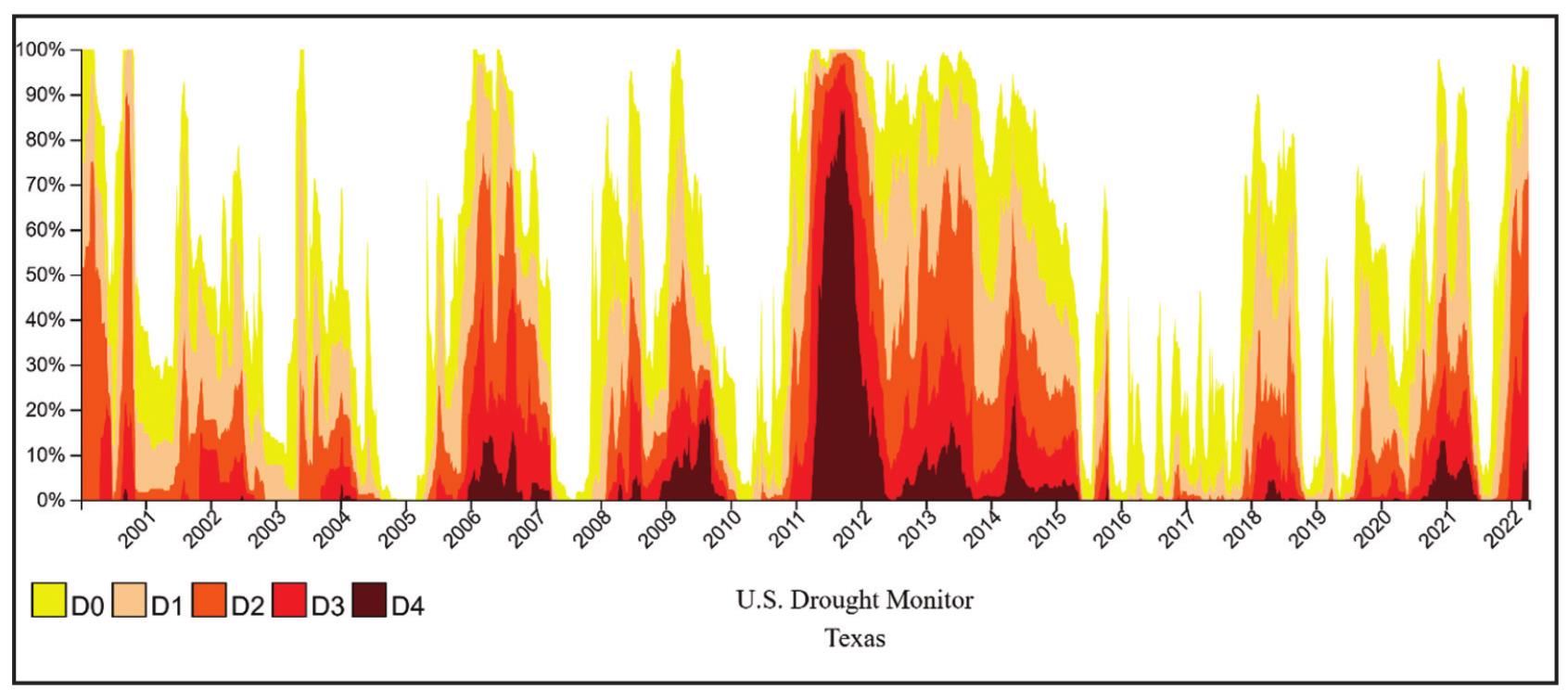
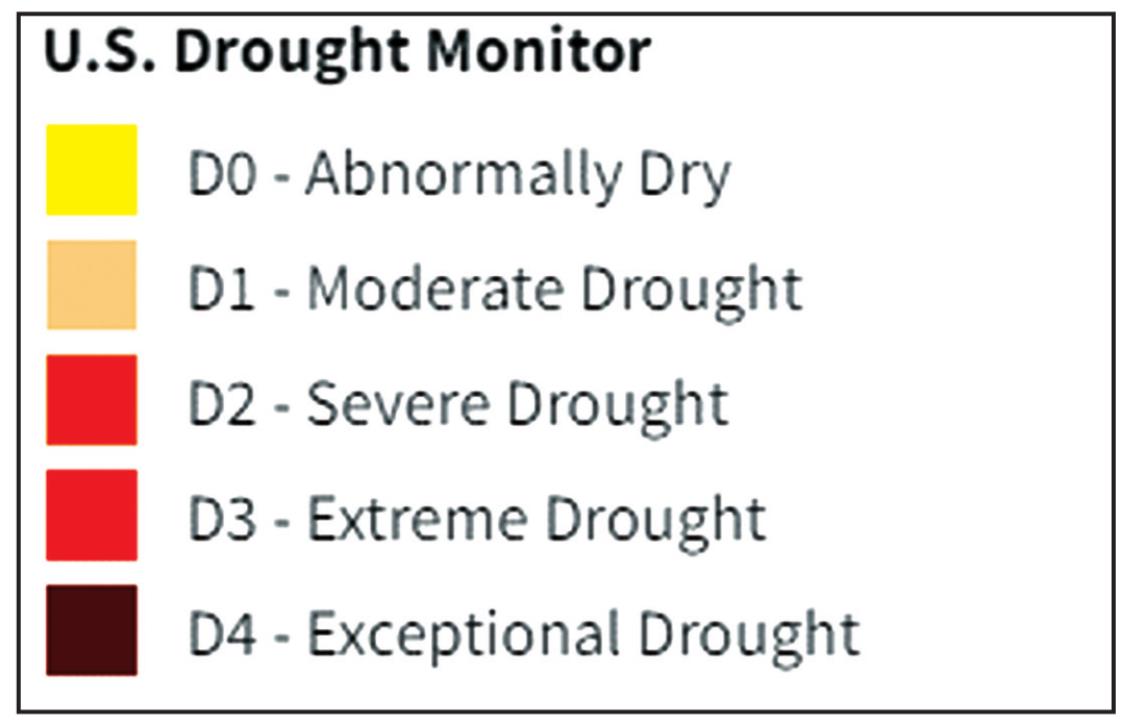
In a recent statement released by the National Center for Environmental Information (NCEI), experts stated “The current multiyear drought across the West is the most extensive and intense drought in the 22-year history of the U.S. Drought Monitor.” The latest Drought Monitor maps showed 88% of Texas in drought with another 9% classified as “abnormally dry.” Statistics from the National Integrated Drought Information System <drought. gov> are quite eye-opening. In Mason, 2022 is the 8th driest year to date over the past 128 years (January-March 2022), measuring 3.14 inches from normal. San Saba was 2.98” short of normal rainfall making January through March the 14th driest year to date period over the past 128 years. McCulloch fared a bit better with rainfall 2.09” short of normal with 2022 ranking 24th over the same range. The problem isn’t just that 2022 is dry but that the area hasn’t had enough rainfall in between to actually recover from extended dry spells. As you can see in the trends depicted below, period of “Abnormally Dry” to “Exceptional Drought” color most years from 2001 to the present. Unfortunately, there doesn’t appear to be an end in the near future. La Niña, associated with widespread changes in weather patterns, is expected to adversely affect precipitation in Texas during the upcoming months. The National Weather Service says there’s a 53% chance La Niña will last from June to August.
We’re already seeing the effects of these dry periods. The District just finished the winter/ early spring water levels and across the board, the Hickory aquifer is down an average of just less than 1.37 feet. The Marble Falls aquifer wells averaged a loss of 1.49 and the Ellenburger averaged a decrease 3.17. The numbers for the Marble Falls and Ellenburger are based only a handful of well. Unfortunately, the District has lost access to many of the wells it once measured due to ownership changes.
What do these conditions mean for our area and the District? For one thing, it means it will take more than a few heavy rains to bring us out of a persistent drought. Since the NWS isn’t predicting monsoons any time soon, we will all have to work together to conserve water.
We are asking all water users, and that means everybody, to conserve water. As the Texas Water Development Board states in their agricultural brochure, “Water is limited. Innovation is unlimited.” Get creative; think outside the box. Try something new. Read about conservation and study new practices. Give rainwater harvesting a go. Plant native species. The list of things you can personally do is quite extensive. Remember that every drop really does count.
For more information, please, don’t hesitate to contact the District Office at 325-597-2785 or email <hickoryuwcd@yahoo.com>. Visit our website at <hickoryuwcd.org>.
Resource: National Integrated Drought Information System, https://www.drought.gov/states/ texas, 2022