
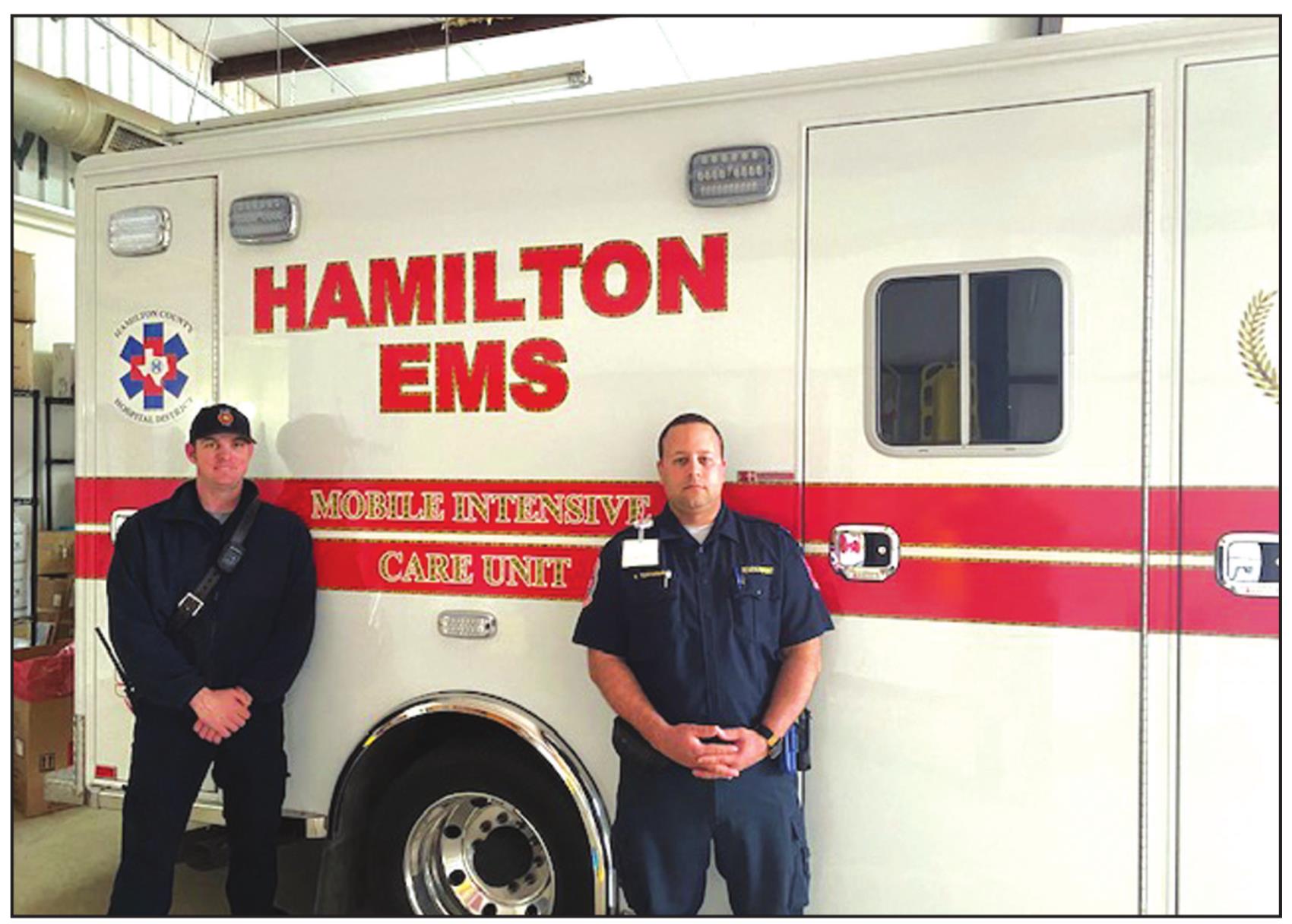
In this final part of the “unsung heroes” series, Wes Alexander, EMS District Chief, Hamilton Hospital, for San Saba County’s based EMS system, sat down with me to share how the week of Storm Uri affected his team and the EMS unit. Wes answered my structured interview questions in detail. However, he added fine points to the story which will allow readers to realize and understand the plight of San Saba County EMS personnel during that infamous week.
Prior to the arrival of Storm Uri, Wes said he and several District Chiefs, as well as hospital management, met for an intensive planning session and began watching the weather service. In fact, the Chiefs had direct contact with a meteorologist who watches what the weather service is saying, plus he predicts his own for whoever is needing accurate results now, if not faster! Wes shared the meteorologist’s predictions were “more in line” with what happened during Storm Uri than the weather service’s predictions. All in all, Wes emphasized “we’re very big on planning up front . . . for emergencies and disasters.”
With the weather analysis, and on the Saturday before the storm, Wes was behind the scenes, so to speak, planning and preparing for the worst storm he has “ever seen in his life,” as the consultant meteorologist told him. With the Central District EMS being made up of Mills and San Saba counties, and back-up ambulances stationed in both, the extra staff were pulled and stationed in San Saba County during the storm. So, with that said, one ambulance was pulled to San Saba County, making a total of three ambulances running in San Saba County and one running in Mills County.
Consequently, instead of two shifts of staff being available in Central District, now there were three shifts on hand and ready. Many stayed the entire time of the storm, not having much of a break. However, some of the clinicians were able to safely travel home. Overall, District Chief Alexander was on duty around the clock from the Saturday before the storm until the following Thursday, at which time he was able to go home. He made sure that any staff who showed signs and symptoms of fatigue were able to be off the clock or go home for rest. This ensures the safety of the staff and patient since it decreases the possibility of mistakes.
One of the negative results of the storm for the EMS staff was the fact that they had no heat in their building due to the rolling blackouts. Chief Alexander stated it was cold in the building and hard to be comfortable or sleep due to the extreme bone-chilling temperatures! In addition, the electric doors had to be manually disengaged each time the trucks went out. Wes made the comment that it would have helped to have had a generator. . . but they do not own the building so a large one would be out of question. He said a generator might be in the future planning stages.
Along with the usual ambulance calls during Storm Uri, ambulance crews made unusual calls too. For example, a patient needed transport, and the road to the house was up hill. Even thought EMS had to go slow in the ice and snow, and the Hamilton Healthcare EMS trucks are bigger than normal ambulances and four-wheel drive, there was a car stuck in this road heading down and blocking most of the road. Chief Alexander stated the staff got out with their gear and walked about one-half mile to the patient’s house. A Cherokee Volunteer Fire Department truck then arrived and towed the car out of the road. The patient was assisted to a car and driven down to the ambulance for transport. Although it took some time, as Wes said, we made it to every call!
The number of wrecks that EMS had to work that week was “almost nil,” according to Wes. He related he was surprised but happy to see that San Saba County residents “didn’t go anywhere!” On the other hand, “people got out and ran around. . . and there were wrecks” in nearby counties. Also, if someone needed transport to medical facilities that they normally would do themselves, EMS would transport if that person’s car would not start or was stuck or if the person could not safely drive on their own.
Wes answered questions about working with other agencies, and he said they always work with the City Police, County Sheriff, County VFDs, etc. He related we always have and always will work together with these agencies as needed. Collaborative teamwork makes for safer and more efficient patient treatment and transfer.
Reflecting on that week during Storm Uri, Chief Alexander admitted there was “one thing we did not plan on. . . and that was fuel trucks not being able to get through” (for fueling gas stations). However, Christa Peterson, owner of Agro Fuel in San Saba, drove a fuel truck to the EMS station and fueled up their trucks and kept diesel aside for the EMS service that week. Wes expressed his sincere appreciation to Christa for her assistance, and perseverance to get out in that cold to pump gas!
When asked about any damages or losses, the Chief stated there were none. He said he attributes this excellent safety record to his staff who are great people and great clinicians who are always hypervigilant about safety issues and precautions. Then, take into consideration, all the man-hours – three shifts for 24 hours during that weeks – plus, all the planning, that went into dealing and surviving Storm Uri. . . literally hundreds of hours that San Saba County and Mills County EMS clinicians, as well as District Chief Alexander, gave to us, San Saba County residents, so that we stayed warm, safe and healthy.
In addition, the City Police were instrumental in working through Storm Uri, keeping people safe, making the roads safe and assisting other agencies and the City of San Saba by reporting any water leaks found while on patrol.
Chief Riggs reported his office was able to have someone on duty 24/7 during the winter weather week. They did have a little overtime but not much. He stated they had to constantly patrol local businesses since most of them were closed due to the bad weather. Thankfully, the businesses had no burglaries. He stated they also did welfare checks on citizens in town to make sure folks were okay.
When on patrol, they did find major water leaks and contacted City workers. Chief Riggs stated the City Employees responded immediately when they were called to help with these issues.
When asked about the problems with electricity, he said, “It was a trying time. The computers were down. We could not do background checks; we just stopped drivers on the road if they needed to be stopped.” He also said the State computers were down for a while, and that also made things more difficult.
Chief Riggs said, “Even though we have never had weather like that before, we were able to respond to all calls and had no surprises.” Again, the City Police was keeping county residents safe when we least knew it!
Finally, San Saba County Game Warden Mason Murr was interviewed for this article of honor. He stated he went from regular patrolling to more of a first responder helping out local authorities with welfare checks, motor vehicle accidents and tracing water leaks.
Warden Murr shared just one of the many stories of the week: There was a vehicle stranded on Hwy 16 South, close to Baby Head Mountain. He and a Sheriff’s Deputy headed out to help the victims. However, the car was past the county line, so the Deputy had to head back.
Since no one from Llano could get there to tow the car due to the black ice, Warden Murr was able to help the stranded driver get the vehicle off the road. He was then able to drive the people to their mother’s house in Llano because he had a four-wheel-drive vehicle. Here again is a hero who some may forget about. . . who some think just give tickets for no hunting licenses, etc.! No, Warden Mason Murr is a hero just waiting to happen. . . all in the line of duty and just like all of the other heroes called out in this continuing series of articles.
Editor’s note: The San Saba News Staff hope you have enjoyed this series. It was our intent to call out those who never want to be called out or have attention turned toward them; for they are the heroes of our small community and the ones we depend on everyday of our lives. . . whether we actually call out “Help” or not! They’re not asking - we are: Please thank these heroes by sending them a note of appreciation, a form of donation, or one day - maybe a hug!