
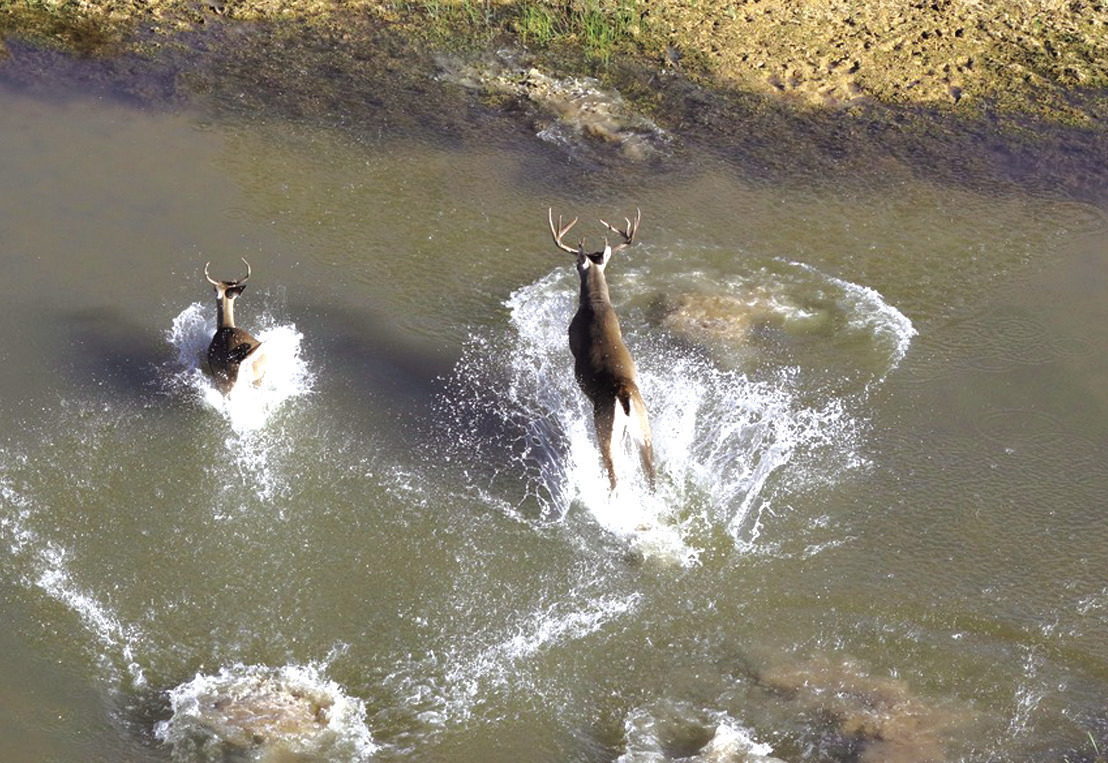
Annual fall wildlife surveys are mission critical for herd and production monitoring purposes. The data is needed to calculate harvest recommendations and guidelines to best balance the herds with the supporting habitat under the ever-changing weather conditions. Surveys provide densities, sex ratios, production success, age structure, and can be an early indication of predator problems or even nutritional deficiencies. Survey data is the primary tool biologists and managers use to direct specific management efforts without guesswork. Data is needed for optimum efficiency and effectiveness.
With the arrival of New World Screwworm (NWS) in Texas on June 3 and flooding events in July, survey data may never be as important as this year. Mother Nature and rainfall have historically been the primary reasons for surveys—the need to gauge the current production rate is ultimately used to formulate harvest guidelines, but now that the flies are present, it is going to be critical to measure, understand, and respond to best manage the wildlife resources on your property.
Screwworm flies target newborns this time of year, not that they “prefer” them, but rather, newborns are the most vulnerable because of the umbilical cord. The umbilicus provides easy and instant access into the body cavity for the New World Screwworm because they are the only flies that seek wounds and/ or natural openings on a living animal to deposit their eggs. Once the eggs hatch, screwworm young—or maggots—consume living, healthy flesh to sustain themselves as they feed and grow. In time, they eventually leave the wound, drop to the ground, and develop into adult flies that repeat the life cycle over again. Young animals are impacted the most because they are the most vulnerable during early stages of life.
Peak fawning dates in north and central Texas range from late May through early August. Peak fawning dates in south Texas range from late June through late August. Unfortunately, the flooding events happened in mid-July and the adult NWS fly thrives in similar warm and humid climes, so the summer months are ideal for insect activity. The timing of the floods and screwworm’s arrival in Texas could not have been any worse for fawn production. Most other wildlife species are also born in the late spring or early summer, too, so this is not simply a deer issue. Think rabbits, feral hogs, mule deer, many bird species, small mammals, desert big horn sheep, and most other exotic species that are now so prevalent throughout Texas. Texas Parks and Wildlife Department has predicted that a severe screwworm outbreak could negatively impact up to 80% the whitetail fawns this summer. Texas Animal Health Commission has indicated this fight against screwworms may last 3-4 years and could take a full decade for wildlife to recover if the outbreak is severe. The previous history of screwworm infestations supports both predictions.
The NEED for wildlife surveys has never been greater. Surveys come in many forms, but some are much better than others. Survey method should be based on the size of the property, terrain, canopy cover, and labor required. State-approved survey methods will be required if you intend to utilize state-issued deer permits, so that means spotlight, helicopter, thermal drone, or trail cameras, again, depending on the size, terrain, canopy cover, and labor required. Supplemental data may also need to be included such as daylight observation data, stand/feeder observation data, and additional trail camera data to support and confirm the survey data. Even historic and current body weights collected from harvested animals will also be very important for managers to use.
Selecting the correct survey method for your ranch is critical to gather the data needed to best understand any impacts required to formulate decisive management decisions this hunting season. Is the density down? Specifically, how low is the fawn survival rate? Is there still a need to harvest surplus antlerless deer this fall? Or was there no impact at all?
Hunting is a tool and method to manage surplus animals on the rangeland. Surplus animals are those that are taken off to balance the herd with the local habitat. If floods or screwworms negatively impact your fawn survival, it is possible that no surplus will exist this year, so hunting pressure will need to be adjusted. But to factually know, realize, and understand it, you first need quality survey data. Reach out to professionals for assistance if needed or make your own plans to use the right survey method for your ranch this fall. Timing is equally important so plan to start your surveys soon and continue into the fall until you have the data-and the confidence—needed to make an informed, data-driven decision that may impact your ranch’s wildlife management program for many years to come.
If you need professional assistance and want to use thermal drones, helicopters, or trail cameras, reach out to us at www. SpringCreekOutdoors.com so that our team of degreed professional wildlife biologists can help. Planning and coordination using survey data and directed hunting pressure has never been more important than the present, so start making plans now to be prepared moving forward.