
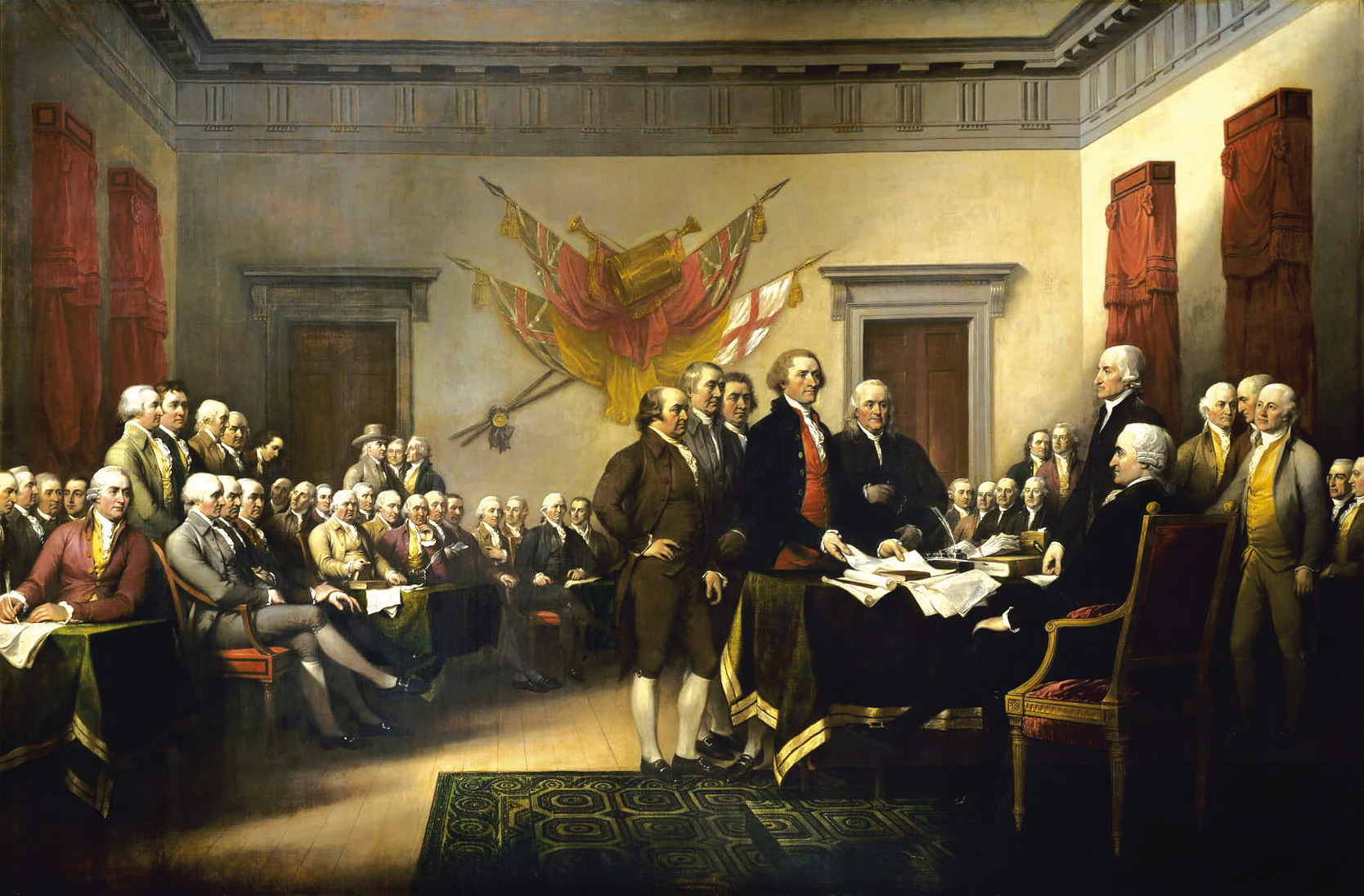
Two hundred and fifty years ago a small group of men in Philadelphia signed their names to a claim larger than themselves: that all men are created equal, and that the rights every person holds are not granted by any ruler, but given by God. They pledged their lives, their fortunes, and their sacred honor to make that stand, knowing that if they failed, every signature on that page was treason.
The liberty they declared did not begin that summer. It had been growing in colonial soil for more than a century, from a faith that taught ordinary people to read the Bible for themselves and govern their own affairs under God. It grew from an old English conviction that even the king is not above the law. It grew from a sober warning, learned from the ancients, that a free people must be a virtuous people or its freedom rots from within.
Most of all, a fragmented people became one. In the 1730s and 1740s a great spiritual awakening swept the colonies. Preachers like George Whitefield and Jonathan Edwards pressed a single message on rich and poor alike, that a person must be born again, and it leveled everyone who heard it. It crossed every colony and every denomination at once, so that for the first time a farmer in Georgia and a merchant in Massachusetts had lived through the same thing. Thirteen separate places began to feel like one people under God before they were ever one nation under law, and a people cannot act as one until it has first felt itself to be one.
When the colonists finally wrote it down, they grounded the whole thing in one place. The Declaration does not credit the government with our rights. It holds it 'to be self-evident, that all men are created equal, that they are endowed by their Creator with certain unalienable Rights.' Every person is equal because every person bears the image of God equally. A right that a government did not give, a government cannot justly take away.
Securing that reality took eight years of war against the greatest army on earth, fought by farmers and shopkeepers who left their plows, often unpaid and barefoot in the snow. The outcome was deeply improbable. And a people who believed God governs the affairs of men read such a deliverance with gratitude, not boasting.
What they built next was just as remarkable. The Constitution was framed on a clear-eyed, frankly biblical view of human nature. Power was divided and set against itself because the founders did not trust it in anyone's hands, a king's or a crowd's, knowing the human heart too well. And when the war was won, the general who could have kept power gave it back, warning that free government rests, in the end, on the religion and morality of its people.
Over the past two hundred and fifty years America has known real greatness and real struggle alike, and the oldest lesson still holds. No election, no law, no new machine mends what is actually wrong, because the trouble was never finally a shortage of systems. It was the human heart.
In the end, the anniversary is about the living, handed a country we did not make and a promise we did not write. Renewal still begins where it always has, in a heart, a home, a neighborhood. Love the Fourth, and mean it. But love it with your eyes open, your hope anchored higher than any flag, in the One who governs the rise and fall of every nation. The promise was handed forward, and now it has reached us. Will we hold it?
This is a condensed version of GraceHaven.ai/resources/ liberty-under-god