
Events Related to the Alamo February 2, 1836
February 2, 1836: Jim Bowie writes a letter to Governor Smith asking for help in defending the Alamo. ”The salvation of Texas depends in great measure on keeping Bexar out of the hands of the enemy.” He wrote.
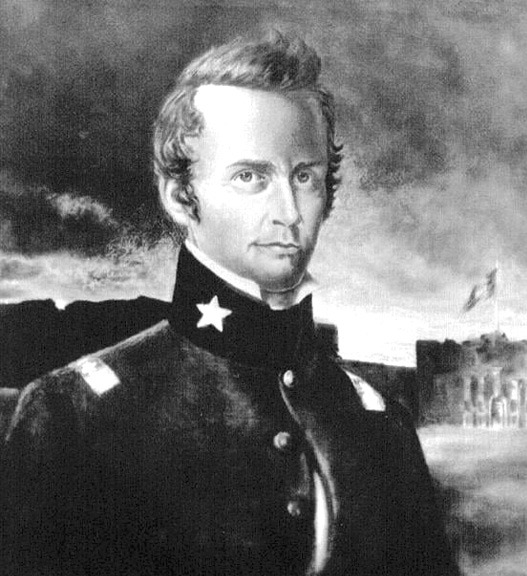
February 3, 1836: William Barret Travis arrives at the Alamo.
His arrival was a Pivotal Moment in History. This marked a significant turning point in the Texas Revolution. This set the stage for one of the most iconic battles in American history.
Travis, a young lawyerturned- soldier, was tasked with bolstering the Alamo's defenses.
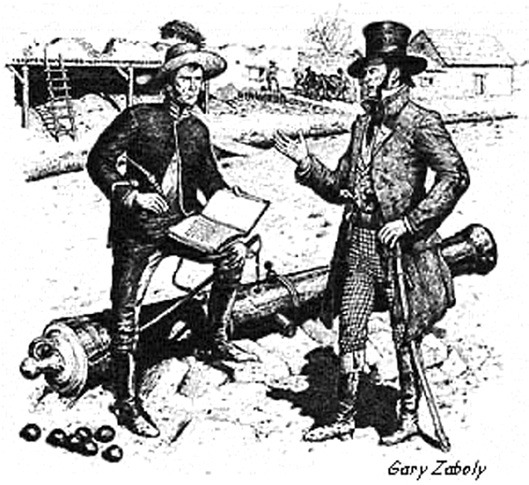
Mid- February, Colonel James C. Neill left the Alamo before General Santa Anna’s arrival, Neill, commander of the post, was called away due to illness in his family. He placed Travis, a lieutenant colonel in charge pending his return. Some of the Alamo’s men objected, because they were volunteers and traditionally elected their own officers. The tensions between William Travis and Jim Bowie stemmed from their differing leadership styles and personalities. Travis was a strict, disciplined officer, while Bowie was more laid-back and favored a more informal approach. This friction was exacerbated by the high-stakes environment and the impending threat from Mexican forces.
Travis ordered a vote in which the men chose Bowie, a volunteer colonel.
Herein lies the misunderstanding. Travis stated that only two small companies voted and not the garrison. Travis offered the volunteers their own commander, Bowie and Travis the larger whole garrison. Whether or not Bowie saw it that way, he exerted his newly acquired authority over not only the volunteers but also the garrison and the town of San Antonio itself, in effect he declared martial law. Alcohol may have been a contributing factor. Travis and another officer complained in letters that Bowie had been drunk since his election. Whether this is true or not the whole problem was resolved in about two days, with a minimum of snarling, when Travis and Bowie agreed to a joint command until Neill’s return. Illness incapacitated Bowie on the second day of the siege, and Neill never made it back, leaving Travis as sole commander of the Alamo.
Travis's leadership and determination became vital in unifying the defenders. His famous letter for reinforcements, became a rallying cry for Texian independence: 'Victory or Death.”
His arrival would later culminate in the legendary 13-day siege of the Alamo, which began on February 23, 1836. The March 6, sacrifices inspired the Texian Army, leading to victory at the Battle of San Jacinto and the eventual independence of Texas. His story reminds us of the courage and resilience that defined this historic chapter. It remains a symbol of unity and determination, echoing the enduring legacy of the Texas Revolution.
February 7, 1836: The men of the Alamo elect Sam Maverick and Jesse Badgett to represent them at the Convention at Washington-on-the-Brazos.