
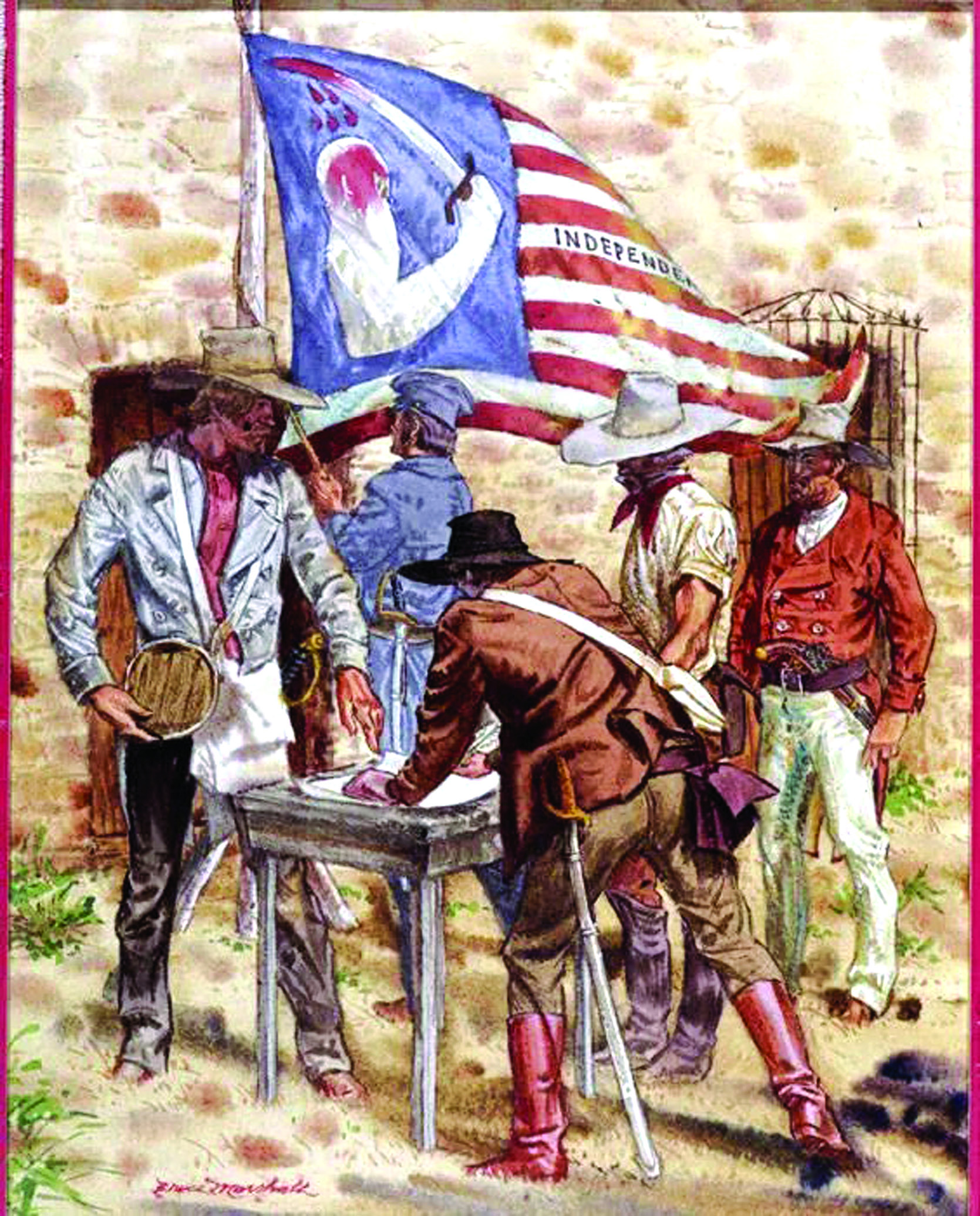
In the last week's of 1835, 190 years ago, The Goliad Declaration of Independence was penned. A handwritten document signed on December 20, 1835, by 89 American-born settlers and two Tejano federalists, declaring Texas to be a “free, sovereign, and independent State” from Mexico.
Texans' concerns over the recent actions of General Antonio Lopez de Santa Anna, who had dissolved the Mexican Congress and state legislatures and abolished the Constitution of 1824 caused the singers to denounce Santa Anna as a scheming “President Dictator”. This was during the early phase of military resistance to centralist Mexican rule and as Anglo-Texians occupied the old fort of Goliad.
Goliad’s signers sent copies of their declaration to various parts of Texas, including a copy carried by a delegation to the Revolutionary General Council that was meeting at San Felipe. One of the copies reached Brazoria, which had a printing press, this enabled it to be printed and widely distributed.
Despite the apparent flaws of the Goliad Declaration—its premature timing, its inflammatory language toward Tejanos, and its political awkwardness—the document carried weight in light of ongoing military events at Goliad. Though the provisional government ultimately sidelined the document, its significance would grow in retrospect. This was just week's before Goliad became the site of one of the revolution’s darkest moments.
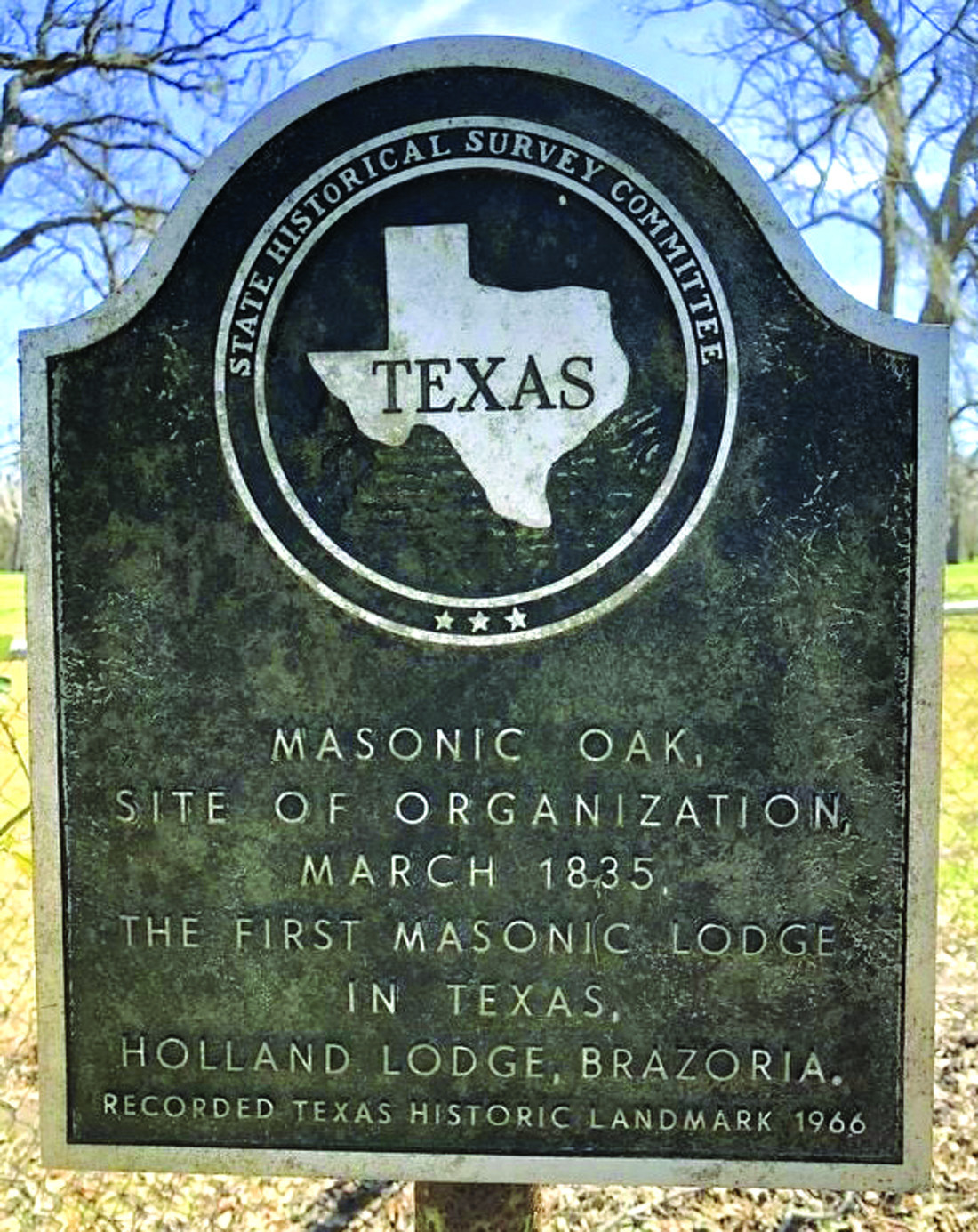
During this same timeframe trying to bring some normalcy to Texas after the Siege of Bexar, on December 27th 1835, The Holland Lodge No. 36, held the first Masonic Lodge organizational meeting in Texas. Anson Jones and five others, fearing Mexican reprisals, secretly met under the Masonic Oak near Brazoria and petitioned the Grand Lodge of Louisiana for a charter. The Holland Lodge struggled for several months until overwhelmed during the Texas Revolution by the Mexican army of Gen. José de Urrea, which destroyed all the lodge's records and equipment. Afterward, because the members were scattered, the brethren decided not to reopen the lodge at Brazoria. Instead, they reopened it in Houston in October 1837.