
A Texas A&M expert says pruning dead plant material can cause additional harm through the winter.
By Adam Russell, Texas A&M AgriLife Communications
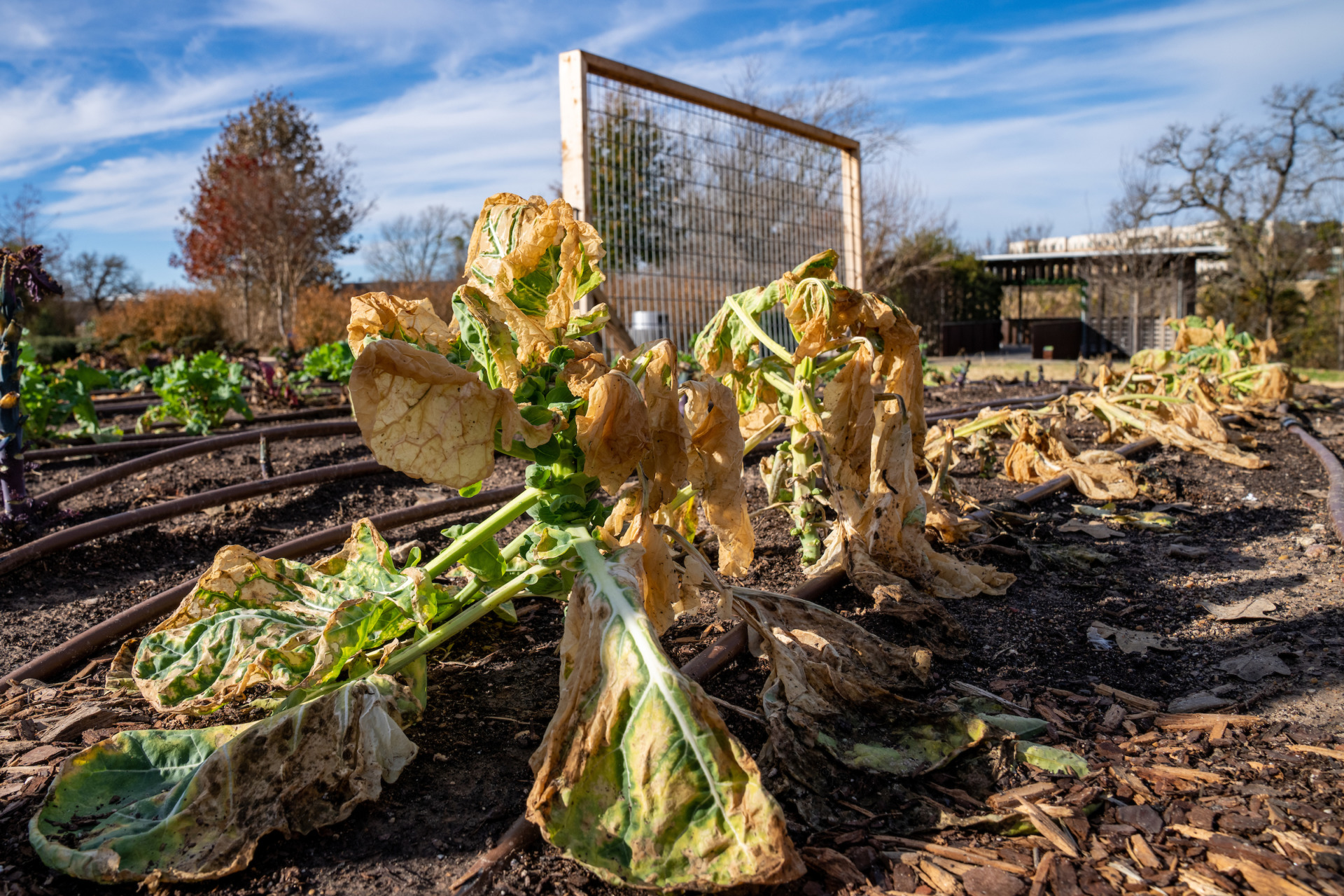
Patience Best After Freeze Damage
Cold-sensitive plants like palm and banana trees or woody herbaceous perennials and ornamental grasses were likely stung by the hard freeze and may look dead or dying, but Arnold said it is best to give them time.
Pruning too early can cause more damage in two ways. First, it removes dead plant material that can help insulate living tissue from future freezes. It also can stimulate new growth before the threat of frost has passed.
Plants that look dead may recover, he said. Dead tissue will be apparent when the plant breaks dormancy in the spring, and waiting will ensure plants with live tissue recover and that pruning is not detrimental to the plant’s long-term recovery.
Warmer days can activate buds below any premature pruning cut, Arnold said. Stimulating new growth that is then exposed to freezing temperatures will inflict more damage to the plant.
Arnold said gardeners should wait until the threat of frost has passed for the location – which could be the first few weeks in January in the Rio Grande Valley into March in North Texas. He suggests pruning around typical local “pruning” dates but said gardeners could act a little early if the 10-day forecast shows temperatures will stay above freezing.
“That dead material is Mother Nature’s insulation and cutting plants back too soon can do more harm than help,” he said. “You also don’t want to pull up plants just because they look dead. If there is live tissue in the crown or below the ground, they are likely to recover. Some gardeners may not like to hear it, but right now is the time for patience.”