
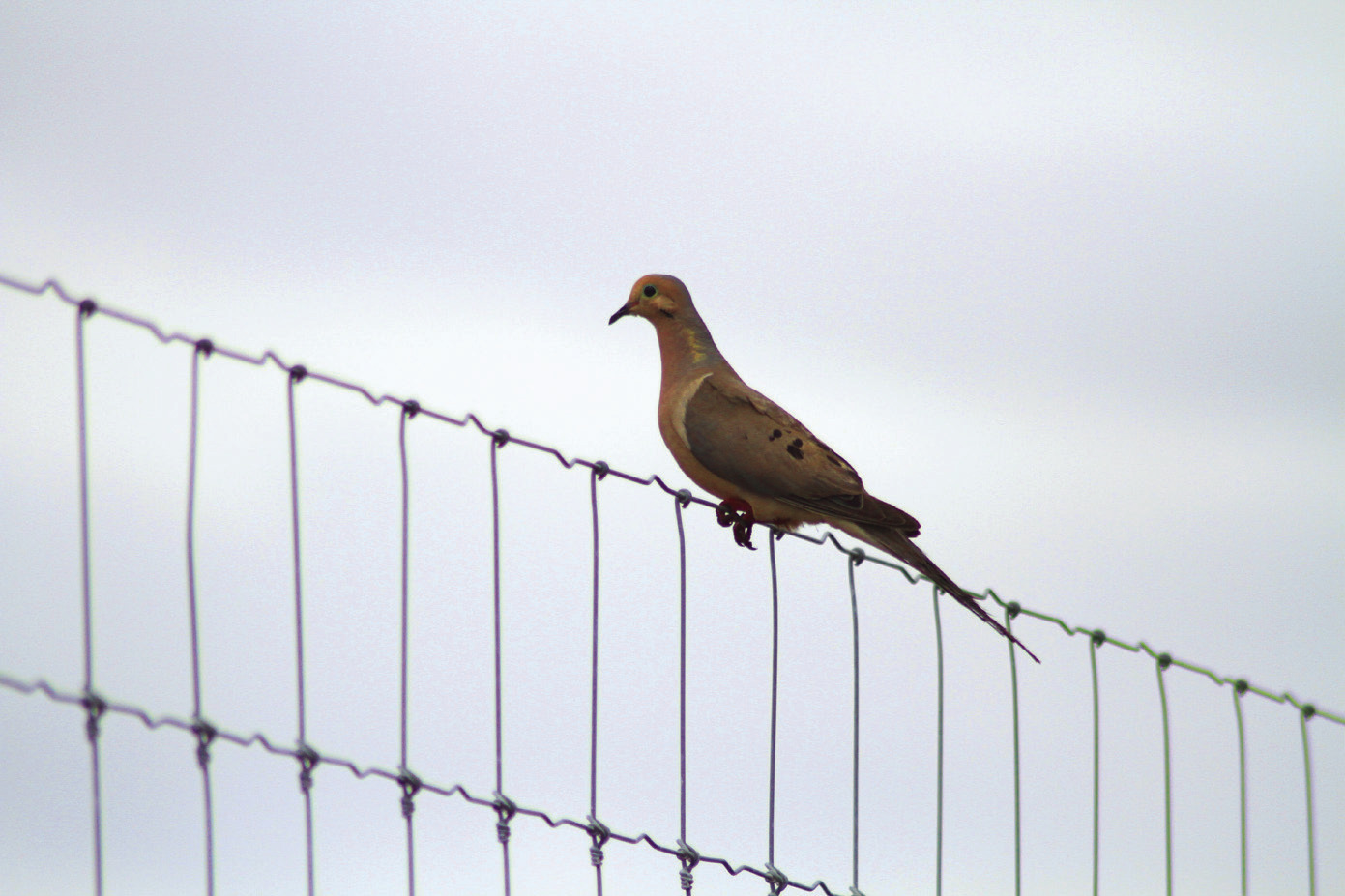
Texas is the number one dove hunting state in the nation and mourning dove are the most numerous and widely distributed game bird in North America. The mourning dove is one of seven species of doves and pigeons native to Texas. Mourning doves are an important economic, recreational, and esthetic resource to Texas and land managers and sportsmen play a vital part in their existence here.
Each spring, male mourning doves establish territories in suitable habitat and announce their presence to competing males and prospective mates by cooing their mournful four-note call from exposed perches. Males also use exaggerated, stiff-winged, flapping-gliding flight to further advertise their territories when moving from one cooing perch to another.
Once a female is attracted to the territory, both birds build the nest, incubate the eggs, and care for the young. Trees with a trunk diameter greater than eight inches and a crown height of ten to thirty feet are generally preferred. The nests are usually located five to fifteen feet above ground level. The clutch usually consists of two eggs laid one day apart. Incubation lasts about fourteen days. The male usually takes nest duties from mid-morning until early evening each day while the female takes the night shift. Since incubation starts immediately after the first egg is laid, the first egg usually develops and hatches about one day before the second. Consequently, one of the nestlings is often noticeably larger than the other. Less than fifty percent of all nesting attempts are successful. High winds, rain, and hail destroy many nests. Snakes, mammals, and avian predators prey on eggs, nestlings, and adults as well.
Both parents feed their young a secretion from their crops known as “pigeon milk.” This substance is very similar to milk produced by female mammals. After about seven days, the pigeon milk is gradually replaced by a diet of regurgitated seed. Young doves grow very rapidly and leave the nest ten to fourteen days after hatching but continue to be fed by the male in the vicinity of the nest for several more days. The female often begins renesting immediately after the young leave the nest. Adult females may nest successfully as often as four or five times in a single season in warm southern climates but only two or three times per season in northern climates.
As with all wildlife species, food, water, and cover are essential for mourning dove survival. Although many small game species such as bobwhite quail and cottontail rabbits spend their entire lives within a mile or so of their birthplace, mourning doves are strong, swift flyers capable of crossing the continent during migration and traveling many miles to obtain their daily needs. Even during the nesting season when they are most sedentary, doves often travel five miles or more for food and water. All of the habitat requirements for mourning doves do not necessarily have to appear on the same property, but they will be more numerous on land where all habitat needs are supplied.
Mourning doves are almost exclusively seed eaters. Native plant seed especially important to doves include sunflower, croton, ragweed, and pigweed. Partridge pea, bundleflower, spurge, panic grass, paspalum, prickleypoppy, and bristlegrass are also important. Introduced seed important to doves include grain sorghum, forage sorghum, corn, wheat, rice, peanuts, domestic sunflower, and Johnsongrass. Soil disturbance is generally the least expensive method of actively providing food for doves, but seed of desirable plants can also be purchased and planted quite successfully.
Mourning doves generally water twice a day, once in mid-morning and once in late evening. As with feeding areas, the dove prefer their water sites open and free of tall, concealing vegetation. An ideal watering site includes a bare landing area at least thirty to fifty feet wide at the water’s edge. A gravel, caliche, or grazed area at the water’s edge will work very well.
The September dove opener in Texas is shaping up to be great hunting. Limited water, lower water levels (think bare dirt around the water’s edge), standing tall weeds/grass and a bumper crop of new birds this spring will make for some outstanding shoots. It may be hot and could actually even be dry this September so hunters need to watch for snakes and take plenty to drink with them in the field. The dove opener is going to be great so start the hunting season out right and take the kids to the fields with you and burn some gunpowder and let’s get the fall party started!