
Newly rediscovered population offers a rare opportunity to understand the ecology and conservation of one of the world's least-studied hammerhead species.
By Ryan Anderson, Texas A&M University at Galveston
July 28, 2026
For nearly two centuries, the Galapagos Islands have inspired scientific discovery. While some might only think about Charles Darwin and his journeys on the HMS Beagle, there is much more to discover. Today, María Antonia Izurieta Burbano De Lara, a master’s student in Dr. David Wells‘ Shark Biology and Fisheries Science Lab at Texas A&M University at Galveston, is building on that legacy by studying one of the archipelago’s most elusive predators — the smooth hammerhead shark (Sphyrna zygaena).
Originally from Ecuador, María Antonia has spent years conducting research throughout the Galapagos. Now, her graduate research focuses on understanding the ecology, movements, and conservation of a species that had gone largely undocumented in the islands for more than two decades. Her project expands on a smooth hammerhead conservation project she helped establish in Ecuador, bringing together researchers from Universidad San Francisco de Quito, the Galapagos National Park Directorate, MigraMar and other international partners to better understand one of the Eastern Tropical Pacific’s least-studied sharks.
“The Galapagos Islands are famous for their for their big schools of scalloped hammerhead sharks, but smooth hammerheads hadn’t been officially recorded in the archipelago for over 20 years,” María Antonia said. “We know very little about where they feed, where they go or how their populations are doing.”
That changed in 2024 when Maria Antonia’s collaborators from Universidad San Francisco de Quito, led by Dr. Alex Hearn, discovered what is believed to be the first documented aggregation of juvenile smooth hammerhead sharks in the Galapagos. Genetic analyses confirmed the species’ identity, revealing what may represent an important nursery area — a habitat where young sharks spend the earliest stages of their lives before moving into the open ocean.
The discovery provides researchers with an opportunity to answer fundamental questions about a species that remains poorly understood throughout the Eastern Tropical Pacific and globally.
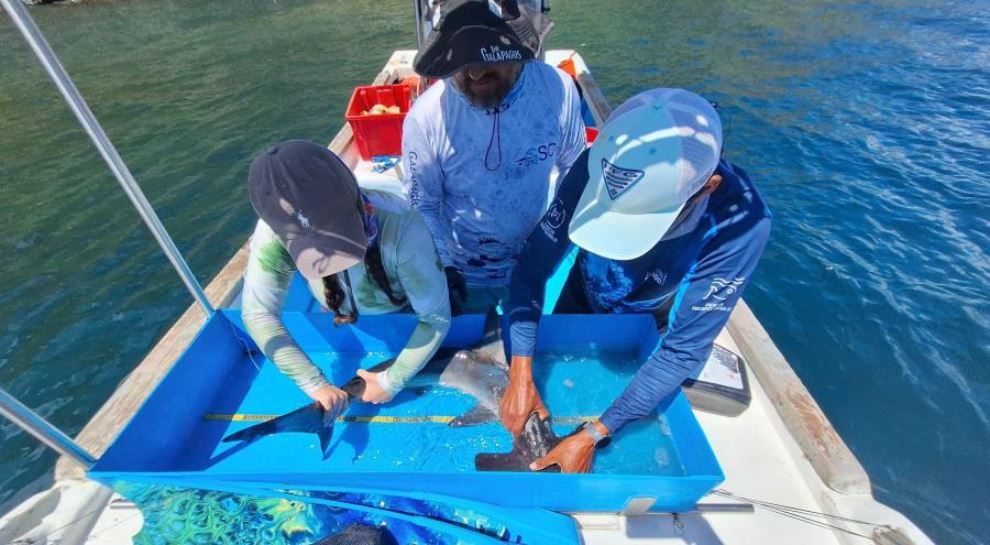
Researchers measure a juvenile smooth hammerhead shark in the waters of the Galapagos islands.
Credit: Texas A&M University at Galveston
Although smooth and scalloped hammerhead sharks appear similar at first glance, subtle differences distinguish the two species. Smooth hammerheads lack the central indentation found on the front of the head of scalloped hammerheads, making them difficult to identify from the surface. As a result, the research team believes the species may have been overlooked or misidentified in the past.
“Once we confirmed they were smooth hammerheads through morphology and genetic analysis, we realized we had an incredible opportunity,” María Antonia said. “Now we’re trying to understand why they use this area, how long are they staying in the bay, where else in the island can they be found and if they are connected with other populations across the Eastern Tropical Pacific.”
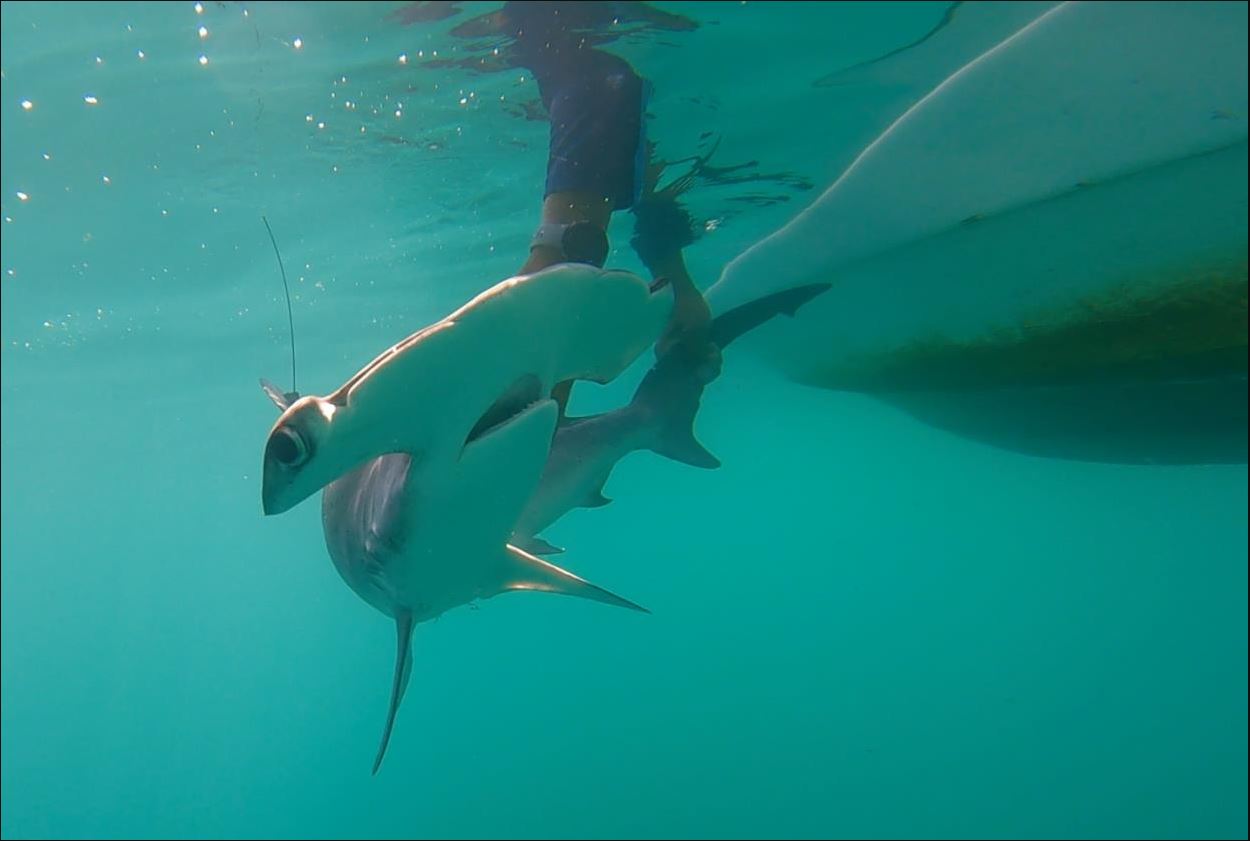
To answer those questions, the research team is using acoustic telemetry, underwater video systems, genetic analyses and dietary studies. Juvenile sharks are fitted with acoustic transmitters that allow scientists to monitor their movements within the Galapagos Marine Reserve, while DNA samples are compared with populations from across the Eastern Tropical Pacific to determine how connected these populations are.
“We’re comparing DNA from sharks throughout the region to determine whether the Galapagos acts as a bridge between northern and southern populations,” María Antonia said. “We’re also analyzing fecal samples to understand what juvenile smooth hammerheads are eating and continuing efforts to study subadult and adult sharks, which have proven much more difficult to capture.”
Understanding where these sharks travel is essential for their conservation.
Smooth hammerheads, like other hammerhead species, are threatened by overfishing throughout much of their range. Even when protected within marine reserves, highly migratory sharks may travel through international waters where fishing pressure remains high.
“Many shark species migrate through areas outside protected waters where they become vulnerable to international fishing fleets,” María Antonia said. “We don’t yet know whether smooth hammerheads follow those same routes, but that’s one of the questions we’re trying to answer.”

Understanding the migration patterns of smooth hammerhead sharks is crucial to finding ways to protect them.
Credit: Texas A&M University at Galveston
The findings could help strengthen conservation efforts by identifying critical habitats and migratory corridors that require protection. Similar research on other shark species has already contributed to expanding marine protected areas and improving regional conservation strategies.
“Our goal is to provide the scientific evidence needed to inform the government on how to better protect these sharks throughout their lives,” María Antonia said. “If we can identify their nursery areas, migration routes and population connectivity, we can better inform conservation decisions not only in the Galapagos but across the Eastern Tropical Pacific.”
For María Antonia, the project is especially meaningful because it combines her passion for marine conservation with her connection to her home country. Rather than beginning an entirely new project for graduate school, she continued the development of the smooth hammerhead project her team initiated in Ecuador by bringing the project to Texas A&M University at Galveston where it continues to grow through international partnerships.
“Growing up in Ecuador inspired me to become a biologist,” she said. “Being able to contribute to the conservation of one of the least-understood shark species is incredibly rewarding. Every new discovery brings us one step closer to ensuring these animals remain part of the Galapagos ecosystem for generations to come.”
Charles Darwin wrote the book of the Galapagos Islands as he saw them in the 19th century. Thanks to the work of María Antonia and others, Texas A&M University at Galveston is engaged in being a force for good in the 21st century protecting the smooth hammerheads and other species so that explorers centuries from now can enjoy them and build on the scientific discoveries surrounding them.
The research is conducted under research permit PC-18-24 issued by the Galapagos National Park Directorate. The project has been made possible through the support of Swiss Friends of Galapagos, Temperatio Foundation, Swiss Shark Foundation, MigraMar, Galapagos Conservation Trust, Galapagos Science Center, Universidad San Francisco de Quito, Greenpeace, Fundación Jocotoco, Oceanogràfic València, Ocean Blue Tree and Texas A&M University.
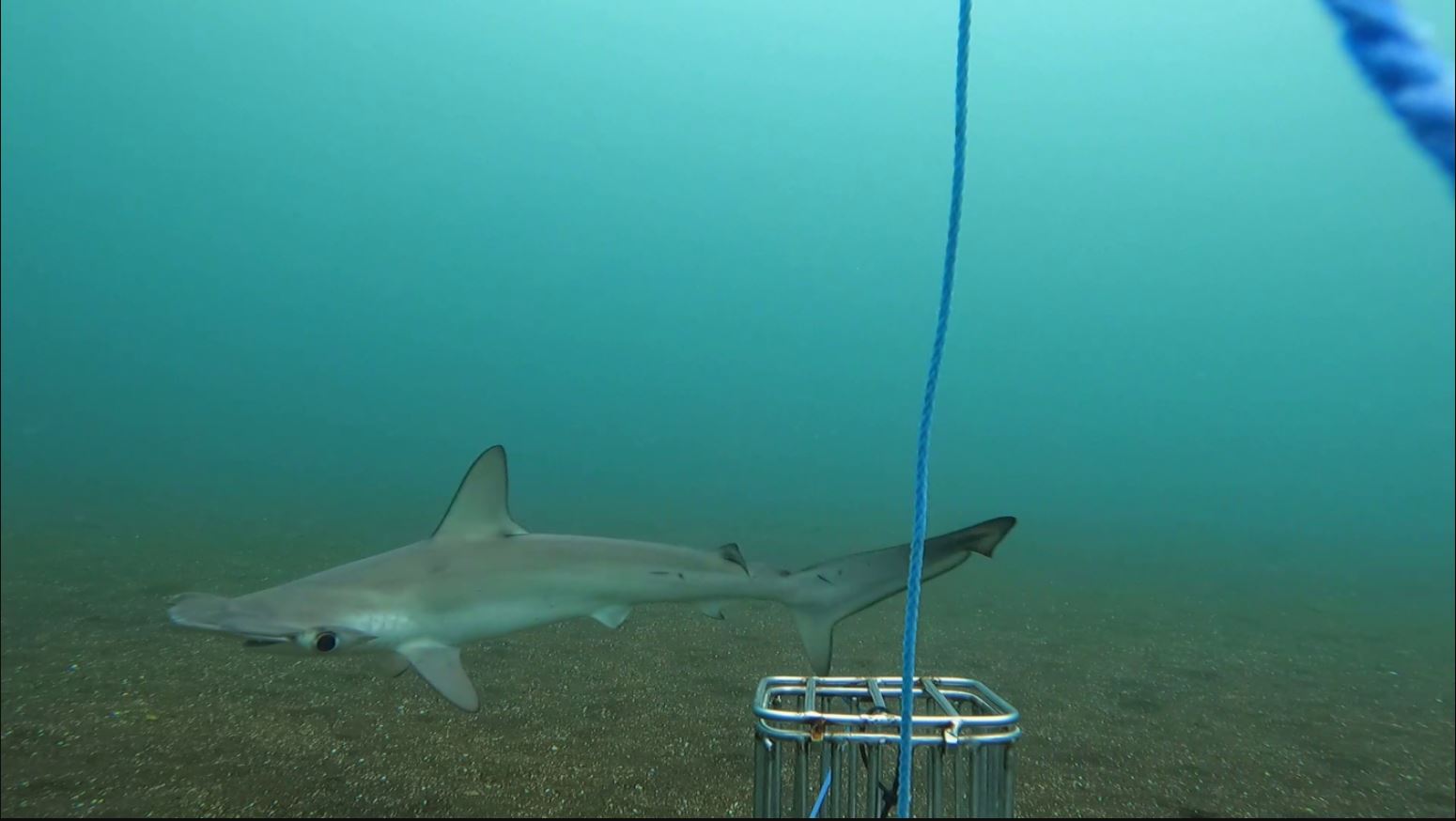
Smooth hammerheads, like other hammerhead species, are threatened by overfishing throughout much of their range. Even when protected within marine reserves, highly migratory sharks may travel through international waters where fishing pressure remains high.
Credit: Texas A&M University at Galveston