
Is it a Weed or a Wildflower?
We have probably all heard or asked that question ourselves. What is the difference? Does it matter? Is there a true distinction, or is it subjective—in the eye of the beholder?
First, let’s define what we can. Most plants are categorized as being either woody (trees, shrubs and vines that have persistent trunks, limbs and stems) or an herb. The latter is defined in my dictionary as “a seed-producing annual, biennial or perennial that does not develop persistent woody tissue but dies back to the ground at the end of the growing season.”
But there are two different categories of herbaceous plants, grasses and forbs. Grasses can be defined as monocotyledonous, usually herbaceous plants with narrow leaves having parallel veins growing from the base. Forbs are frequently defined as herbaceous plants that are not grasses. So, if a land plant is not woody and not a grass, it is a forb. But if you ask most of the knowledgeable people I know, they will define a forb as a “weed or a wildflower!”
So, now that we have come full circle and I have totally confused you, what is the difference between a weed and a wildflower? The one I hear most often is that a weed is a wildflower that is growing where you don’t want it.
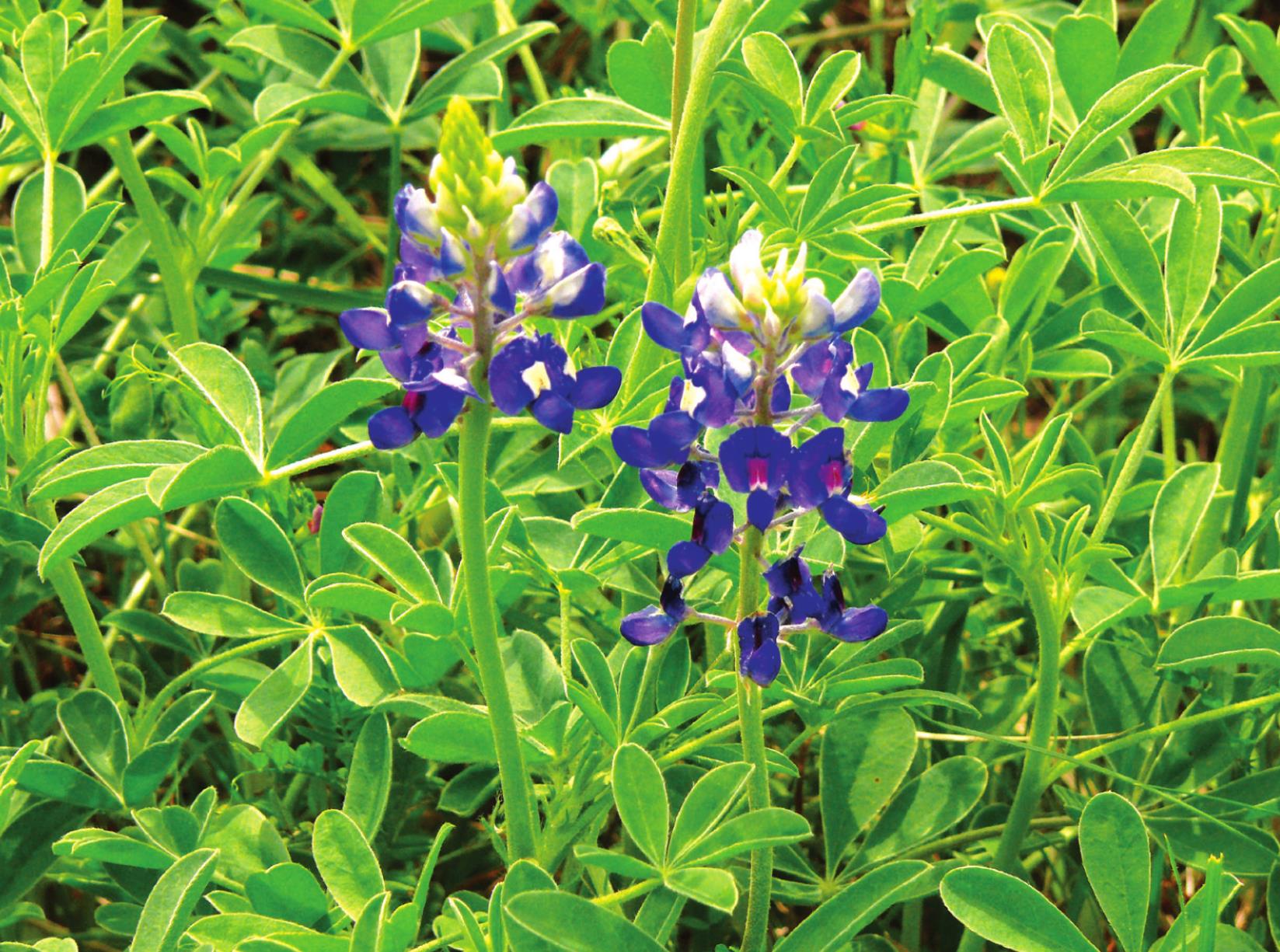
Of course, that definition means that you and I can look at the same plant in the same place and disagree on whether it is a weed or a wildflower. Also, you can consider a bluebonnet growing in an area where you planted it as a wildflower, but when it grows up in your lawn, then you may think it becomes a weed.
It is really interesting the strong feelings many folks have about flowers and plants in general. I guess we all have flowers we like and those we don’t, and some of those feelings date back to our childhood. If your mother grew this or that and commented favorably on it, then chances are that you will like it, too. But, if she fought a certain plant to keep it out of her yard and cursed its existence, then chances are that you hate it, too.
Or, if you were raised on a farm or ranch and a certain plant grew up in the fields, or accumulated around the stock tank and nothing ate it, then chances are you have pretty strong feelings about it, too. The very fact that something grew in the pasture that the cows wouldn’t eat was reason enough to hate that plant and to feel that it was crowding out the good grass that the cows needed.
Since bluebonnets are the state flower of Texas and sort of a Texas icon, just about everyone thinks of them as a wildflower and would like to see more. Same thing with several of the other spring bloomers that grace our roadsides in good years such as Gaillardia, (aka Indian blanket or firewheel), Indian paintbrush and winecup, followed later by the many yellow flowers, such as Engelmann daisy, coreopsis and greenthread. Most everyone would consider all of these to be wildflowers, almost anywhere they grow.
But equally common and noticeable are Mexican hat and white prickly poppy. Some people hate Mexican hat for reasons I don’t fully understand, except that cattle don’t eat it. Some years it is very common, and other years it is less so. Many folks mistake white prickly poppy for a thistle because of the prickles on the leaves and stems. So it is common for folks to consider these wildflowers to be weeds.
My personal definition is that native forbs are wildflowers and non-native forbs such as Malta star thistle, musk thistle, bastard cabbage, purple loosestrife, and ox-eye daisy are weeds. For that matter, I would also consider any of the “cultivars,” “hybrids” or “varieties” of native plants such as ‘New Gold’ lantana and ‘Henry Duelberg’ salvia as noxious weeds as well. We don’t need our real native Texas lantana or mealy blue sage contaminated with non-native genes.
So the bottom line is some weeds are wildflowers and some wildflowers are weeds, depending on your point of view—you can have your own opinion about anything, and so can I. But I would hope most folks would learn to appreciate natives and not non-natives.
Hope you had a great Christmas and have a Happy New Year!
Until next time… Jim Stanley is a Texas
Jim Stanley is a Texas Master Naturalist and the au thor of the books “Hill Country Ecology,” “Hill Country Landowner’s Guide” and “A Beginner’s Handbook for Rural Texas Landowners.” He can be reached at <jstmn@ktc.com>. Previous columns can be seen at <www.hillcountrynaturalist. org>, or at Riverside Nature Center at <https://riversidenaturecenter.org/past-blogsfrom-a-friend/>.