
The Joy of Watching Nature
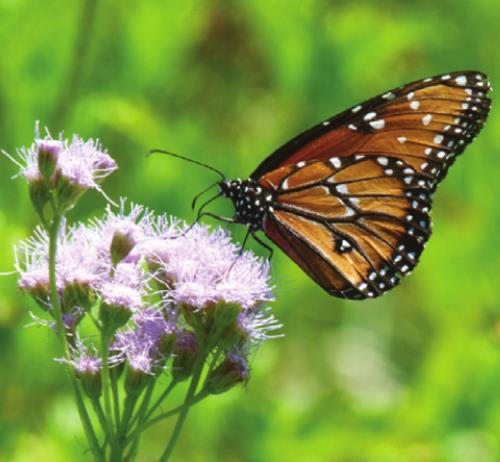
As I sit at my computer writing this, I can look past my monitor and watch the queen butterflies literally flocking to the blooms on Gregg’s mistflower, or the hummingbirds probing each tiny bloom on the prairie larkspur, both of which are growing just off the porch only a few feet from where I sit. Or I can watch the lesser goldfinches at the thistle feeder under the porch overhang. The entire view out my window is a collection of native trees, shrubs, flowers and grasses, and being able to see it all on a regular basis makes whatever I am doing here on the computer much more enjoyable.
And when I take my coffee cup and go out on the porch and sit quietly to watch all of the goings-on it is even more enjoyable. I never get tired of watching the squirrel climb over the back gate, run down the path, up the old cedar tree and over onto the post oak and down to the ground to see if the birds spilled any sunflower seeds. Or watching the cardinals taking a bath in the recirculating stream.
It is truly amazing to watch the barn swallows swoop onto the nest on the light fixture under the porch eve to feed the growing young. They (the adults or the brood) seem to never tire of this. They seem to be able to find insects in the air in a very short time—more than I thought existed.
This year it has been interesting to watch the old agave, with its only chance at immortality, put up an 18-foot tall flower stalk with huge flat yellow and green flower structures, all in a matter of a few weeks.
The point of all of this is just to describe what to me is one of the real joys of life, simply watching, observing and studying nature. And all of what I just described occurs every day in an area of about a half acre. The reason I am writing about this is to remind folks with busy, distracted lives, to figuratively, “stop and smell the roses.”
The nature purist will have noted that much of what I described above is not truly “natural,” because the bird feeders and the water feature were obviously something we added, and to be fair, the Gregg’s mistflower and the prairie larkspur, while native wildflowers, were planted. But my point is that you don’t have to be in a true wilderness to experience nature. You don’t have to drive to a distant park or hike miles up a trail or book some “outdoor adventure.” For most people you don’t even have to leave your back yard.
Bada Dioum, an environmentalist from Senegal said, “In the end, we will conserve only what we love, we will love only what we understand, and we will understand only what we are taught.” I have been fortunate to have witnessed a number of instances where people have learned something new about the natural world around them and almost immediately came to value it more and were more inclined to conserve it.
So one of my goals in life is to try to interest as many people as possible in becoming more educated about and involved with nature in whatever way works for them. The more people know about nature, the more they will care for their little piece of it, and the better off the Hill Country will be for all of us.
If you are an adult and nothing I have written above about viewing nature appeals to you, then I feel sorry for you because I believe you are missing out on a really important part of life. If you are a parent, I hope that among the many gifts you give to your children will be an appreciation of and a love for the natural world.
I think just getting the kids out of the house and away from all their electronic gadgets, away from texting and Facebook and out into the real world will be good for them, both mentally and physically. And some of them may even discover a love for real live things that is unmatched by anything that they see on a little screen.
The future stewardship of the Hill Country will rest in the hands of today’s kids, and if they don’t care about it, its future will be in jeopardy. If a generation grows up thinking the natural world around them is unimportant and therefore fails to conserve it, they will regret it when it is too late to save it.
I will be at Riverside from 10 to 12 on Fridays, come by and let’s talk.
Until next time…
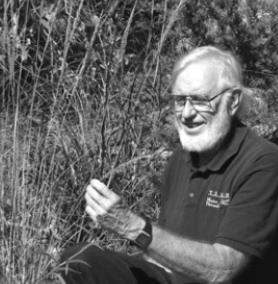
Jim Stanley is a Texas Master Naturalist and the author of the books “Hill Country Ecology,” “Hill Country Landowner’s Guide” and “A Beginner’s Handbook for Rural Texas Landowners.” He can be reached at jstmn@ktc.com. Previous columns can be seen at www.hillcountrynaturalist.org .