
U.S. Environmental Protection Agency (EPA) Administrator Lee Zeldin, together with Assistant Secretary of the Army for Civil Works Adam Telle announced Monday, Nov. 17 a proposed rule that would establish a clear, durable, common-sense definition of “waters of the United States” (WOTUS) under the Clean Water Act.
The proposal follows the Supreme Court decision in Sackett and delivers on the Trump Administration's commitment to protect America's waters while providing the regulatory certainty needed to support our nation’s farmers who feed and fuel the world and advance EPA’s Powering the Great American Comeback initiative.
The agencies developed this proposed rule using input from multiple sources, including a pre-proposal recommendations docket, information from nine public listening sessions, and consultation comments from states, tribes, and local governments. Key proposed revisions include:
• Defining key terms like “relatively permanent,” “continuous surface connection,” and “tributary” to appropriately delineate the scope of WOTUS consistent with the Clean Water Act and Supreme Court precedent;
• Establishing that jurisdictional tributaries must connect to traditional navigable waters either directly or through other features that provide predictable and consistent flow;
• Reaffirming that wetlands must be indistinguishable from jurisdictional waters through a continuous surface connection, which means that they must touch a jurisdictional water and hold surface water for a requisite duration year after year;
• Strengthening state and tribal decision- making authority by providing clear regulatory guidelines while recognizing their expertise in local land and water resources;
• Preserving and clarifying exclusions for certain ditches, prior converted cropland, and waste treatment systems; Adding a new exclusion for groundwater; and
• Incorporating locally familiar terminology, such as 'wet season,' to help determine whether a water body qualifies as WOTUS;
• In addition, the limitation to wetlands that have surface water at least during the wet season and abut a jurisdictional water will further limit the scope of permafrost wetlands that are considered to have a continuous surface connection under the proposed rule. These proposed changes are intended to provide clarity and consistency to the continuous surface connection definition.
'When finalized, the rule will cut red tape and provide predictability, consistency, and clarity for American industry, energy producers, the technology sector, farmers, ranchers, developers, businesses, and landowners for permitting under the Clean Water Act,' The EPA wrote in a release.
The proposed rule will be published in the Federal Register and open for public comment for 45 days. EPA and the Army will host two hybrid public meetings. Details about commenting either in writing or during a public meeting can be found on EPA’s website (epa.gov). The agencies look forward to reviewing public comment while working to expeditiously develop a final rule.
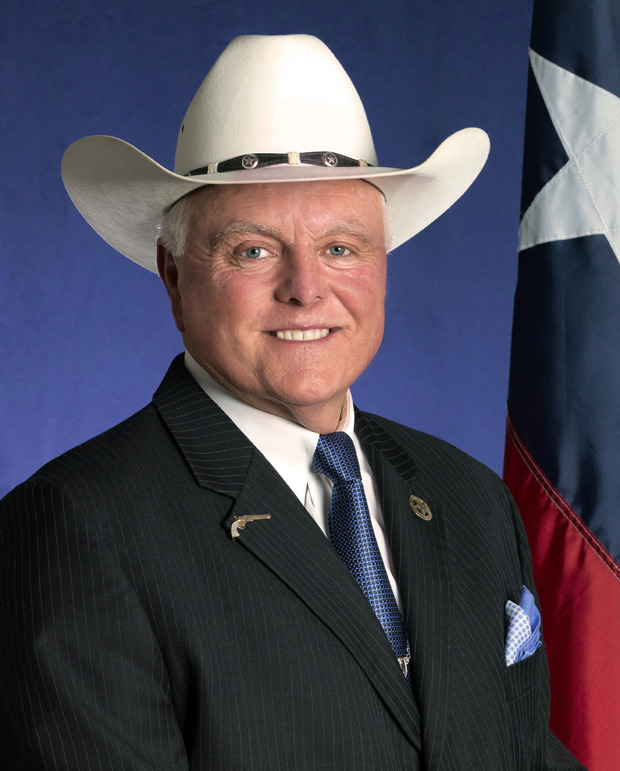
Texas Agriculture Sid Miller weighed in on the action, saying: “For too long, DC regulators rolled out fuzzy rules that left folks unsure whether a puddle meant they needed a federal permit or not. That bureaucratic overreach has cost producers time and money. I’m proud to say that shortsightedness has ended under President Trump.
'I have fought for this type of commonsense solution for years. It’s high time we clarify what constitutes navigable waters and connected wetlands and do it in a way that doesn’t penalize the folks who keep food on our nation’s tables.
'I urge the public to give this proposal the close look it deserves during the public comment period, so the EPA can move fast to finalize it. America’s farmers and ranchers are looking for rules that safeguard American water while treating everyone fairly and preserve the freedom to keep American agriculture growing.'