
Dead plant material is valuable: don’t throw it away
When it comes to deciding about how to manage a native habitat, I always try to think about how Mother Nature did things before humans arrived and started to “manage” things and to “improve” the landscape. One thing I know for sure, Mother Nature didn’t throw things away.
Humans, on the other hand, tend to want to get rid of things they consider to be “unattractive,” especially dead plant material. But dead plant material is an important component of a healthy, functioning ecosystem, and it takes many forms from many different sources.
Let’s start with lawns. Regular readers will know that lawns are not my favorite landscape feature, being wasteful of resources and poor habitat. But this is one place where many folks don’t just collect dead plant material; they make it dead in order to collect it. Mowing and collecting the clippings is removing some of the fertilizer and any other nutrients that were contained in the leaves as well as some of the water and, at least in the case of many folks, the clippings are simply thrown away.
Dead plant material contains the organic matter so vital to a healthy soil as well as many minerals. A host of insects and microscopic creatures help to break down this organic matter into tiny particles which are then incorporated into the soil. Organic matter is the most commonly lacking component of Hill Country soils.
Raking leaves that are then bagged and thrown away is also throwing away the nutrients contained therein. Mother Nature would recycle those nutrients back into the trees next year, but in the meantime, the leaf litter on the ground not only forms a shady blanket over the soil reducing the evaporation rate of the moisture in the soil, but it also provides a habitat for various insects and microorganisms that are important for a healthy-functioning soil. Leaf litter also serves to protect the soil surface from being dislodged by raindrops and thus the beginning of erosion.
Of course, some of the loss of organic matter and nutrients can be somewhat recovered if the grass clippings and leaves are composted and then returned back to the soil. Successful composting requires some effort and knowledge, but it can produce a very useful soil amendment. Periodic aeration (turning over the pile) and moistening greatly speeds up the process.
Downed limbs not only provide a habitat for some insects and microorganisms and the critters that feed on them, but they also provide a “nursery” area for grass, forbs and woody plants to grow up and get established inside the protection of the dead limbs. Downed limbs also slow down water runoff and reduce erosion.
And then there is the issue of dead trees. Of course, if you live in town, there may be a lot of peer pressure for you to remove a dead tree in your front yard. But certainly for those of us in the country, there is the option of leaving dead trees alone and allowing them to decay and fall naturally. Standing dead trees provide food for woodpeckers and other animals seeking the insects under the bark. In addition, holes drilled by woodpeckers not only provide nest sites for themselves, but for other species as well. Many living, as well as dead, trees have large hollow limbs and trunks that provide homes to squirrels, ringtails, owls and a number of other native critters.
Downed wood in the form of large limbs, as well as tree trunks, will rot slowly, providing nutrients to mushrooms, microorganisms and various insect larvae. The slow decomposition of dead wood, facilitated by these species, provides a long term source of organic matter and minerals to the local soil.
And finally, in riparian areas, downed tree trunks are an important feature to help to slow down flood water, dissipate energy and provide habitat for riparian fauna such as frogs, toads and turtles.
The bottom line is that throwing away dead plant material is taking away an important component of the fertility of future soil and thus the plants that will be growing in that soil. In addition, removal of all dead plant material is also removing an important component of a healthy native habitat that cost us nothing, but is important to the functioning of your local ecosystem. So try not to throw it all away.
Happy New Year
Until next time…
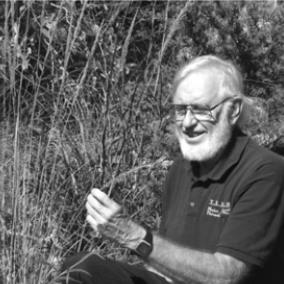
Jim Stanley is a Texas Master Naturalist and the author of the books “Hill Country Ecology,” “Hill Country Landowner’s Guide” and “A Beginner’s Handbook for Rural Texas Landowners.” He can be reached at <jstmn@ktc.com>. Previous columns can be seen at <www.hillcountrynaturalist.org>, or at Riverside Nature Center at <https://riversidenaturecenter.org/past-blogs-from-a-friend/>.